What is a hackathon problem statement? One paragraph a team can act on #
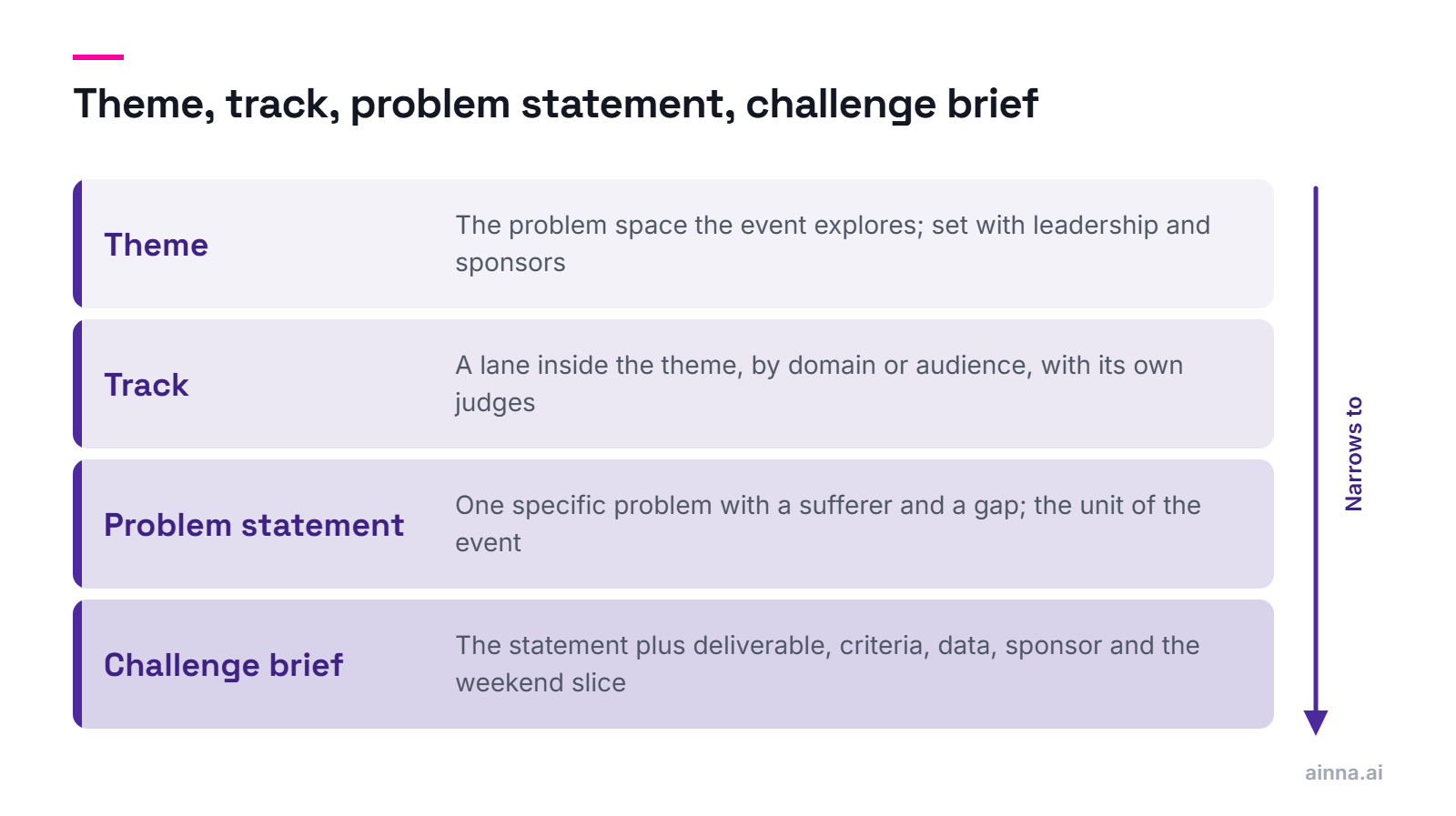
One paragraph a team can act on by Sunday. A hackathon problem statement describes a situation, names the gap in it, says who lives with it, why now and why it matters, and stops before any solution. It is the smallest unit of the hackathon's design: the theme sets the space, the statement sets the problem, the brief adds the deliverable and the criteria. In Innovation Mode 2.0, the theme “establishes the problem space where participants will innovate,” and “The clarity and specificity of your theme directly impact the quality and relevance of participant solutions.” The statement is where that specificity lives.
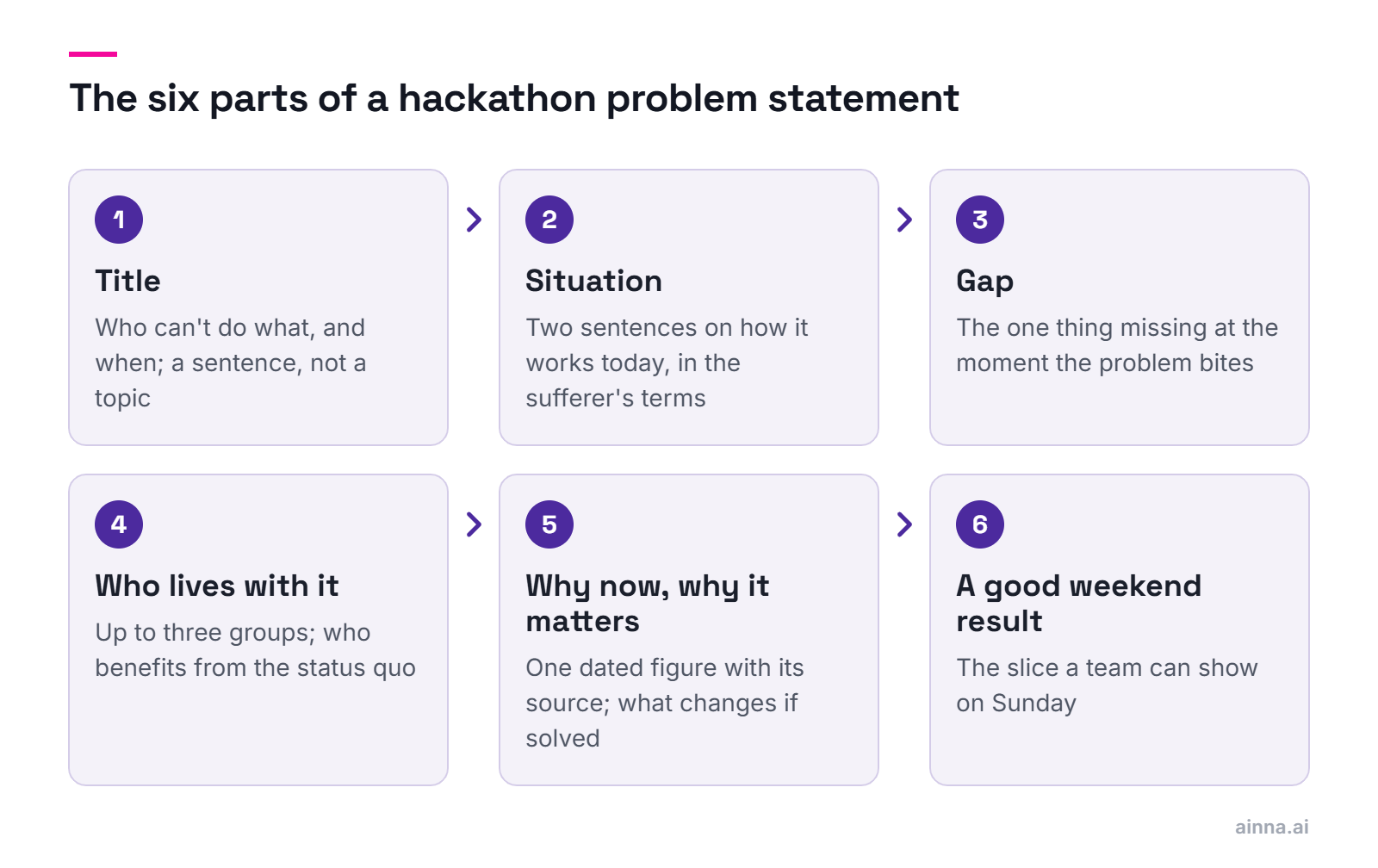
- The shape: a title in the form ‘who can't do what,’ a paragraph of five or six sentences, three lines on who lives with it, one sourced sentence on why now, two on why it matters; see the six parts
- A worked example: Readers can't check the AI answer they were given, from the hackathon pack of Ainna's Problem Radar: the situation (people take answers from a source they doubt), the gap (nothing lets them check at the moment they receive it), the sufferers, one figure, and no solution
- What it is not: a brief (that adds the deliverable, the criteria and the data), a theme (that is the space), or an idea (that proposes the fix). The book keeps these apart because “Problems are more compact and simpler than ideas”
- What it does for the team: it answers ‘what are we solving, for whom, and why would anyone care on Monday’ before the first line of code; the participant's side is in how to know whether your hackathon idea is good
- What it does for the judges: it is the yardstick. A project is judged against the gap it was asked to close, not against the loudest demo; see judging against the statement
- What it does for the company: a well-framed problem outlives the event. The book's point: “Stand-alone problems become assets in the innovation process”
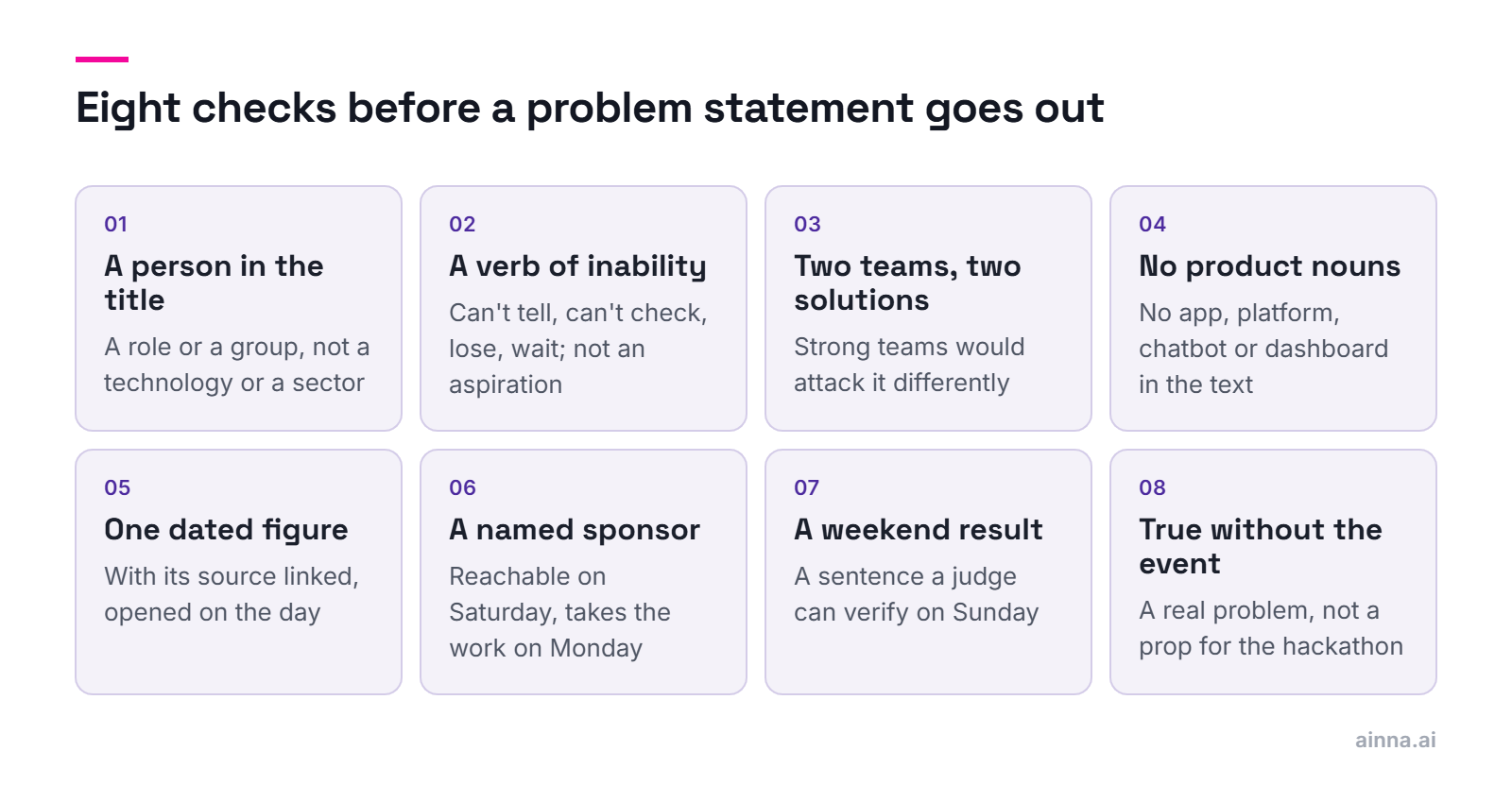
Write the statement so that a stranger can read it in a minute, name the sufferer and the gap, and start. If it needs a presentation to explain, it is a theme.