What is a Product Requirements Document (PRD)? #
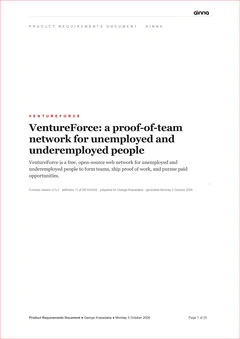
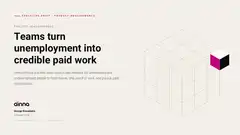
A PRD (product requirements document) is the alignment artifact that tells your team what to build and why - not how to build it. It translates a product vision into a shared, actionable understanding across engineering, design, business, and leadership. In the AI era, it's leaner, faster to produce, and more focused on outcomes than ever before.
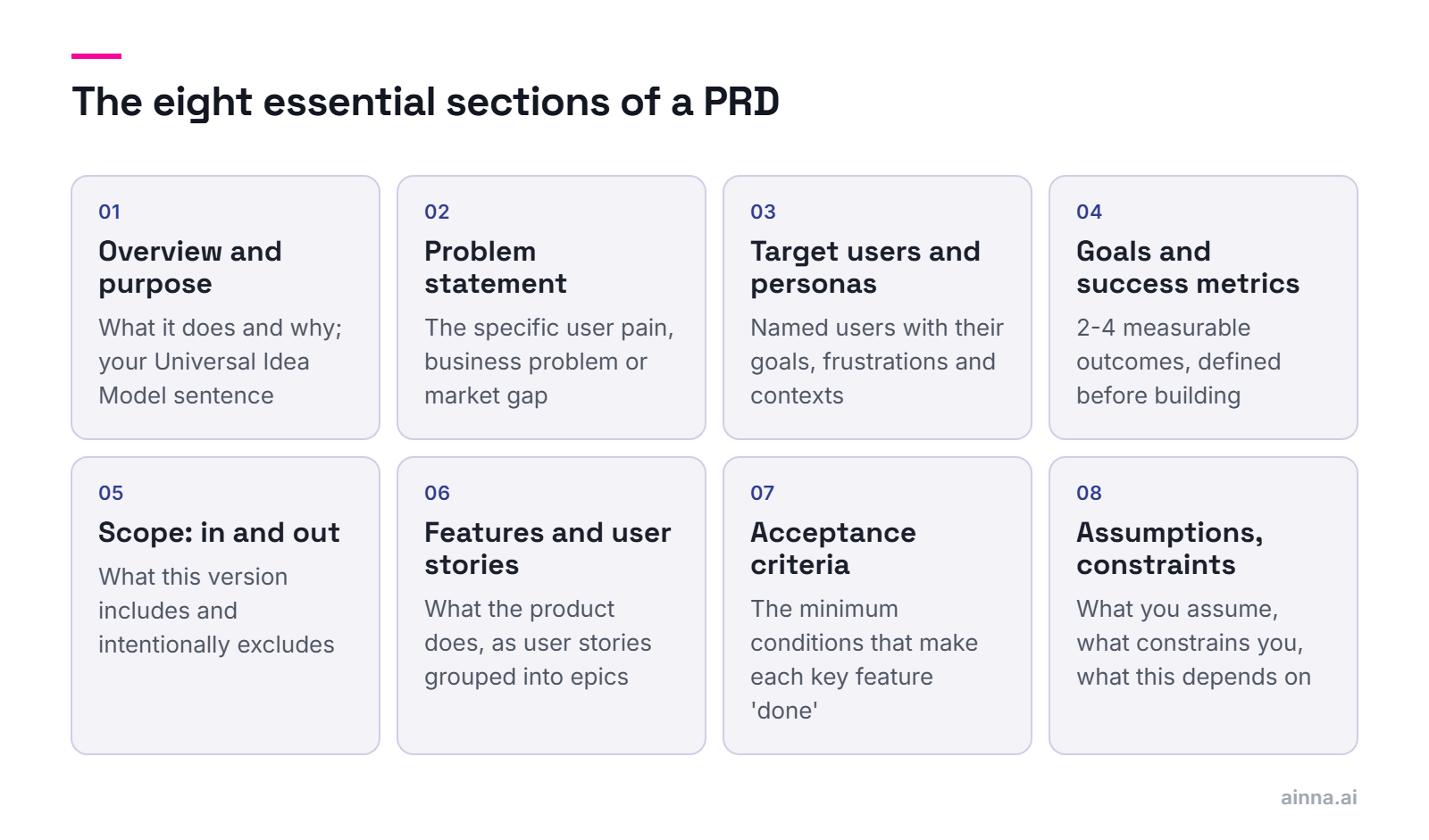
- A PRD defines the product's purpose, key features, target users, success metrics, and scope boundaries
- It's the bridge between product discovery (problem space) and product development (solution space)
- A PRD does not dictate implementation details - that belongs in technical specs and engineering design docs
- It serves as a single source of truth for product managers, designers, engineers, QA, and stakeholders
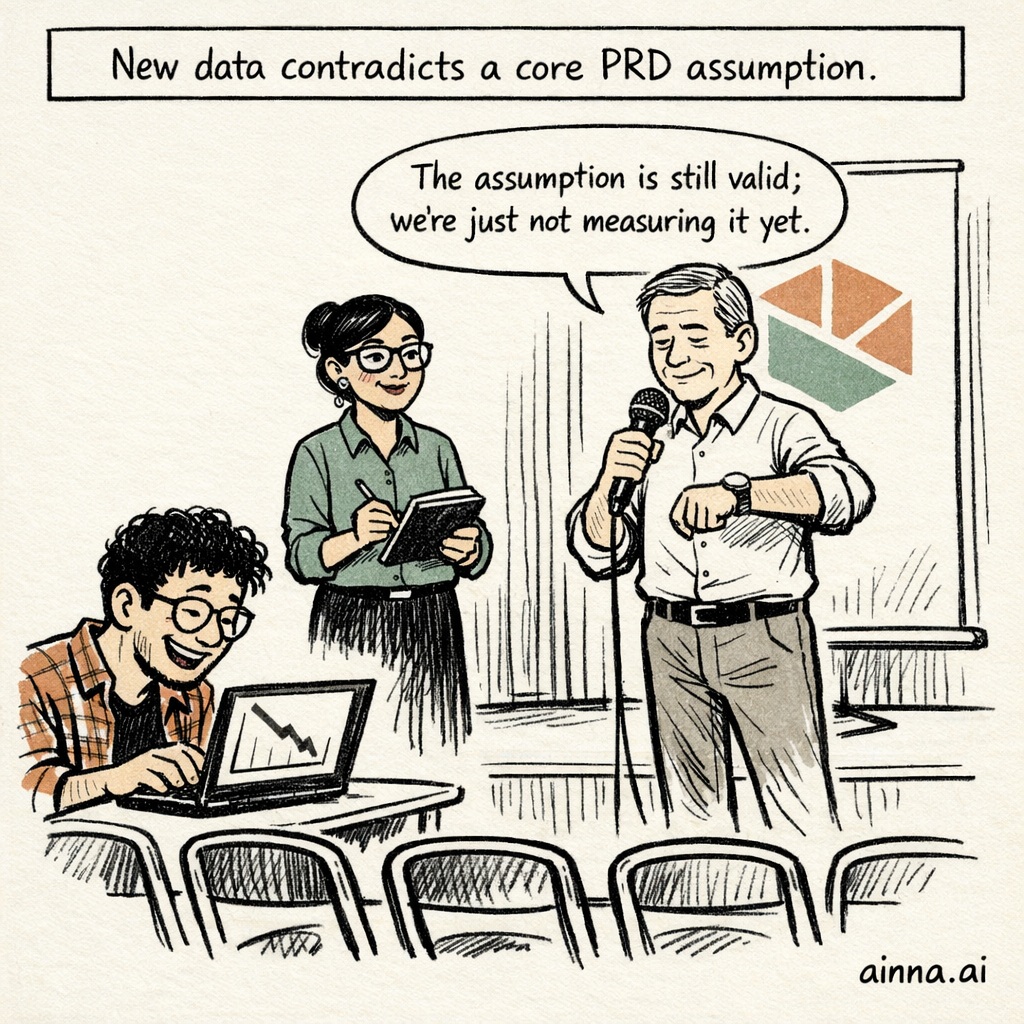
- Modern PRDs are living documents - they evolve as you learn, not static specifications written once and filed away
- In an agile context, a PRD may be a concise one-pager backed by a backlog of user stories with acceptance criteria
Key Takeaway
The goal of a PRD is alignment - everyone building the product should be able to read it and understand what they're building, for whom, and why it matters. If it achieves that, it's a good PRD regardless of its length.
Sources1