Your work, distilled

Clarity,
documented.

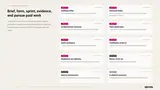
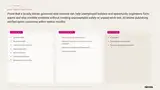
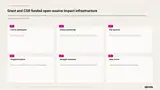
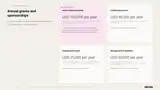
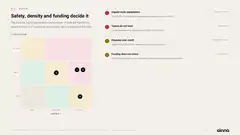
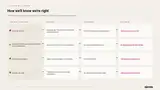
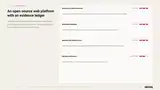
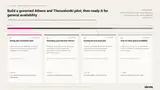
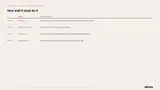
Start with a problem. Ainna frames it with you, brainstorms the ideas, grades them against the evidence and works the strongest through: who it's for, the market, the competition, the product and the plan. Then it packages the work as any of these documents, from a problem framing deck to a pitch, a PRD or the system's architecture. Move the light to look.Touch the wall to look.

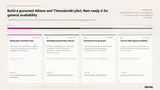
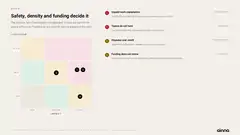
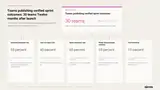
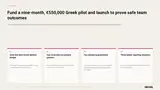
Examples of the documents Ainna writes: problem framing documents and decks, brainstorm outcome decks, social carousels, one-pagers, pitch decks, product requirements documents (PRDs), PRD decks and executive briefs, functional requirements specifications (FRS) and system architecture documents.

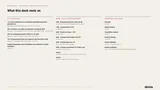
The contents Twelve documents · 151 sample pages

Contents

IThe problem

  1. 01

    Problem Framing Document

    Word · 5 pages

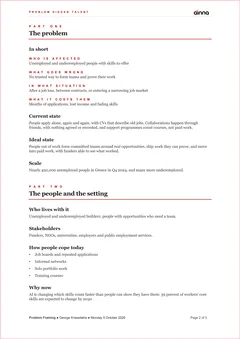
    Pins the challenge down before anyone proposes a fix: who it hurts, what it costs, the evidence, why now, and what solved would look like.

    Distilled fromthe framing session, the evidence logged with its sources, the brainstorm board and what people said.

    • In short
    • Current and ideal state
    • How people cope today
    • Why now
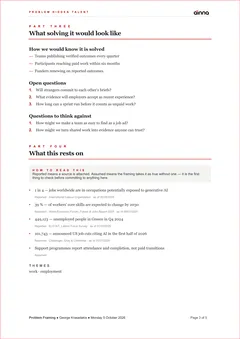
    • What solved looks like
    • Open questions
    • The evidence, reported or assumed
    • The grade
    • The board, and what people said

    GuideProduct discovery documents

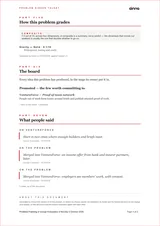
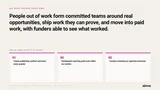
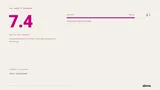
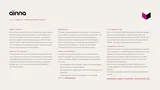
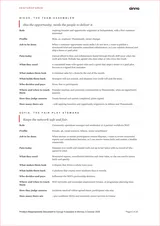
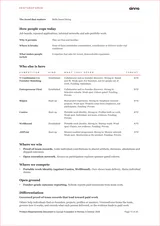
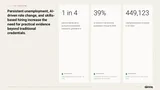
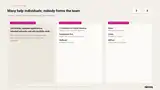
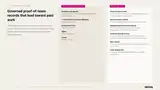
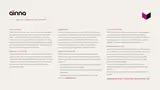
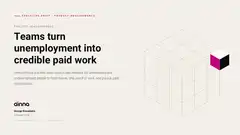
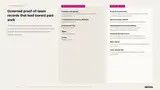
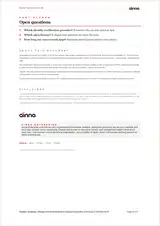
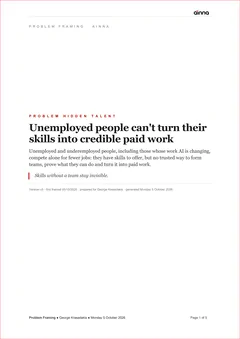
    Sample Problem Framing Document for Problem Hidden Talent, page 1: Title page. The problem, the line people remember, and who framed it.Sample Problem Framing Document for Problem Hidden Talent, page 2: Part one, the problem. The problem in short, its current and ideal state, then the people and the setting.Sample Problem Framing Document for Problem Hidden Talent, page 3: What it rests on. How we would know it is solved, the open questions, and the evidence, each with its source and date.+2
    Look inside
  2. 02

    Problem Framing Deck

    PowerPoint · 11 slides

    The same framing, built for the room: the evidence in figures, why now, who it touches, what solved looks like and how it grades, so the team agrees before anyone pitches.

    Distilled fromthe framing, its evidence and grade, and the ideas on the board.

    • Taken apart
    • The evidence, in figures
    • Where things stand
    • Why now
    • Who it touches
    • What solved looks like
    • How it grades
    • The questions it raises
    • Directions on the board
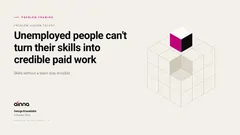
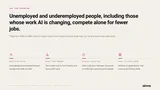
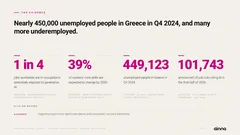
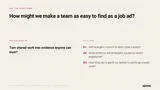
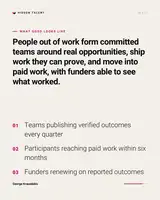
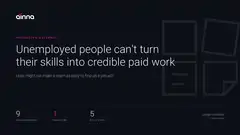
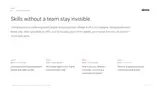
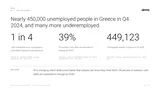
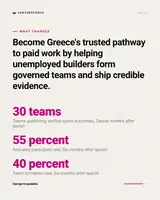
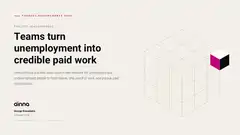
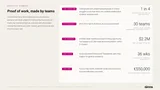
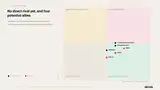
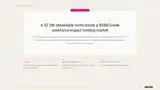
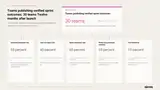
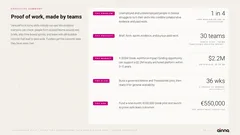
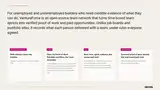
    Sample Problem Framing Deck for Problem Hidden Talent, slide 1: Cover. The problem's name, the line people remember, and who framed it.Sample Problem Framing Deck for Problem Hidden Talent, slide 3: The evidence. The scale, then four figures, each with its source; the claim that has none, under them.+8
    Look inside
  3. 03

    Problem Social Carousel

    PowerPoint · 5 portrait slides

    Five portrait slides for LinkedIn or Instagram: who it hurts, the evidence and what good looks like, ending on a question for your network.

    Distilled fromthe framing and its strongest evidence.

    • A cover that stops the scroll
    • Taken apart
    • Why it matters
    • What good looks like
    • A question for your network
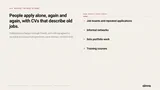
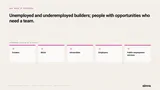
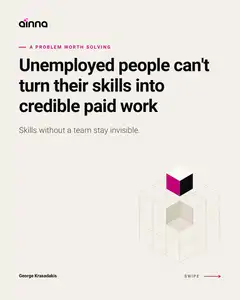
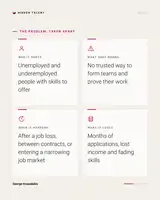
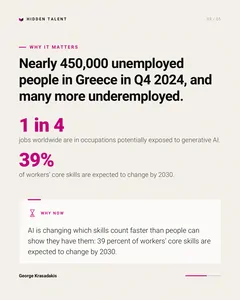
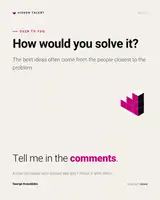
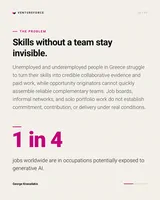
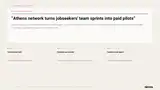
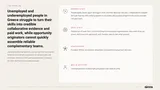
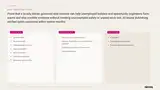
    Sample Problem Social Carousel for Problem Hidden Talent, slide 1: Cover. The problem, stated plainly, with the line people remember.Sample Problem Social Carousel for Problem Hidden Talent, slide 3: Why it matters. The scale, why now, and the figures behind it, each from a named source.+3
    Look inside
  4. 04

    Brainstorm Outcomes Deck

    PowerPoint · 10 slides

    Reports a session to the people who weren't in the room: every idea promoted, what's still open, what was ruled out and why, and how it ran.

    Distilled fromthe brainstorm board: every idea, where it stands, the Judge's grade, and the reason behind each decision.

    • The question
    • The stakes, in numbers
    • What solved looks like
    • The ideas promoted
    • The ideas still open
    • The ideas ruled out, with reasons
    • How the session ran

    GuideAI brainstorming

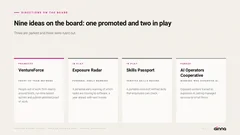
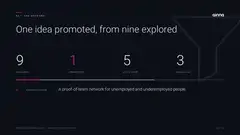
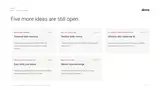
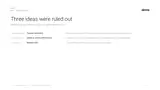
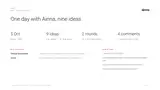
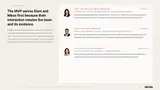
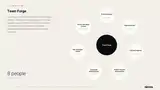
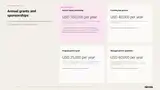
    Sample Brainstorm Outcomes Deck for The session that found VentureForce, slide 1: Cover. The session's question, and its numbers: ideas explored, promoted and still open.Sample Brainstorm Outcomes Deck for The session that found VentureForce, slide 5: The outcome. One idea promoted from nine explored.+7
    Look inside

IIThe idea

  1. 05

    Idea One-Pager

    Word · one page

    A concept on one page: what it fixes, how it works, and the essentials at a glance, ready to share.

    Distilled fromthe idea's definition: what it fixes, how it works, the users, the market and the business model.

    • What it fixes
    • How it works
    • At a glance: users, market, business model and form factor

    GuideHow to write a one-pager

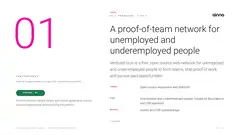
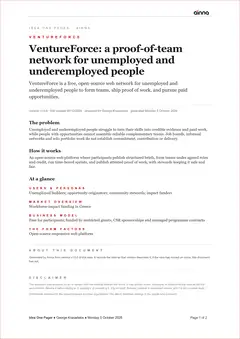
    Sample Idea One-Pager for VentureForce, page 1: The one page. The problem, how it works, and the idea at a glance.
    Look inside
  2. 06

    Idea Social Carousel

    PowerPoint · 5 portrait slides

    Five portrait slides that sell an idea in a feed: a bold cover, the pain, the idea in three steps, what changes, and a call to action.

    Distilled fromthe idea's definition, the need behind it and its success measures.

    • A cover that stops the scroll
    • The pain
    • The idea, in three steps
    • What changes
    • A call to action

    GuideStartup idea validation

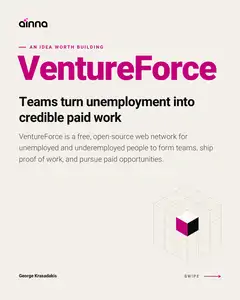
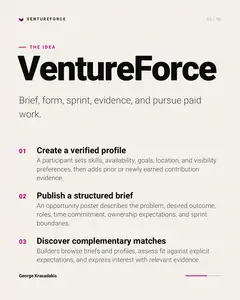
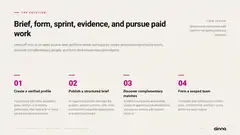
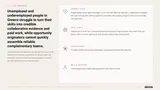
    Sample Idea Social Carousel for VentureForce, slide 1: Cover. The idea's name and promise, set to be read in a feed.Sample Idea Social Carousel for VentureForce, slide 3: The idea. How it works, in three steps.+3
    Look inside
  3. 07

    Pitch Deck

    PowerPoint · 16 slides

    Makes the case, slide by slide: the need, the users, the market, the competition, the product, the business model and the ask.

    Distilled fromsix analyses: the personas, the market sizing, the competitive map, the product definition, the business plan and the delivery plan.

    • The problem
    • Why now
    • The solution
    • Who it's for
    • Why it wins
    • The market
    • The landscape
    • Business model
    • Go-to-market
    • How we'll know
    • The plan
    • The team
    • The ask
    • The vision

    GuideHow to build a pitch deck

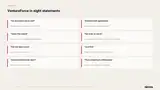
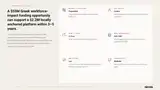
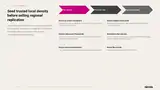
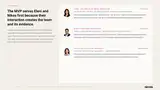
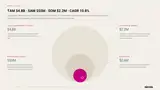
    Sample Pitch Deck for VentureForce, slide 1: Cover. The promise, in the product's own words.Sample Pitch Deck for VentureForce, slide 4: The solution. Brief, form, sprint, evidence: how it works, step by step.+13
    Look inside

IIIThe product

  1. 08

    Product Requirements Document (PRD)

    Word · 20 pages

    Says what to build and why: the users, the requirements as user stories, the MVP scope, success metrics, risks and the delivery plan, clear to engineers and to leadership.

    Distilled fromsix analyses: the personas, the market sizing, the competitive map, the product definition, the business plan and the delivery plan.

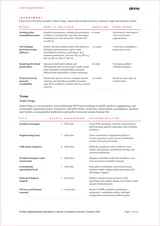
    • The product at a glance
    • The need
    • The users, in full
    • The solution and the happy path
    • The MVP, and what is out
    • Requirements, as user stories
    • Quality requirements
    • Business model
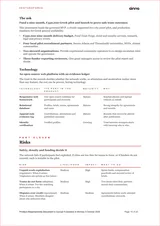
    • Risks
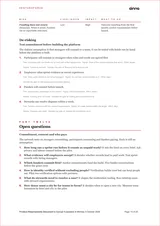
    • Plan and success metrics

    GuidesHow to write a PRDHow to write user stories

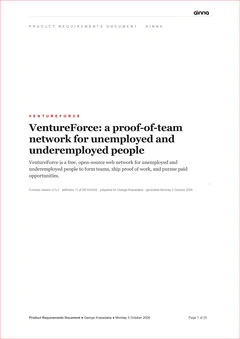
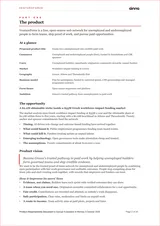
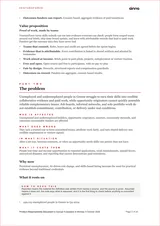
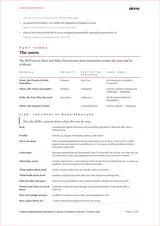
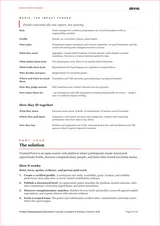
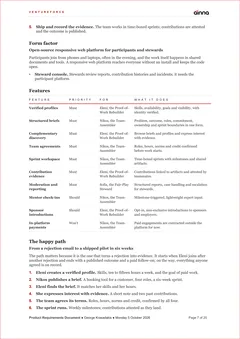
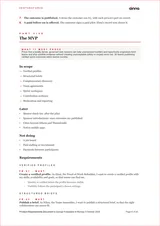
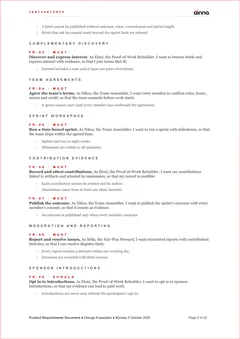
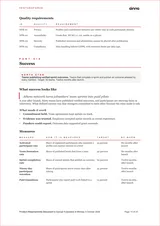
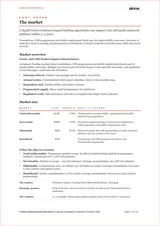
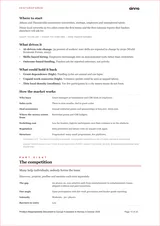
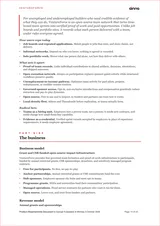
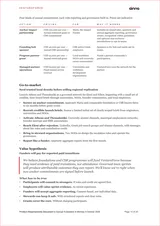
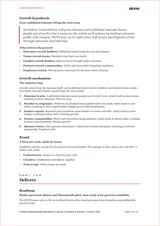
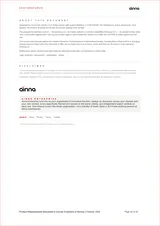
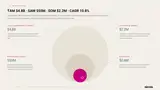
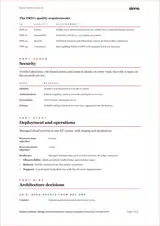
    Sample Product Requirements Document (PRD) for VentureForce, page 1: Title page. The product, its promise and a one-paragraph summary.Sample Product Requirements Document (PRD) for VentureForce, page 7: The solution and the happy path. How it works, the features with their priorities, and one user's path through the product.Sample Product Requirements Document (PRD) for VentureForce, page 9: Requirements. Every requirement as a user story, traced to a feature, with its priority.+17
    Look inside
  2. 09

    Product Requirements Deck

    PowerPoint · 42 slides in four parts

    The PRD, set for the alignment meeting: four parts (discover, define, build, launch), with the requirements in an appendix.

    Distilled fromthe same six analyses as the PRD, set as slides.

    • Executive summary
    • Discover: the need, the users, the market, the competition
    • Define: vision, value, the happy path, the MVP, the business model
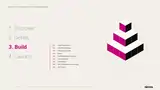
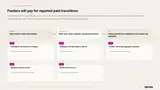
    • Build: hypotheses, risks, experiments, technology, the team
    • Launch: go-to-market, growth, the ask
    • Appendix: requirements and sources

    GuideWhat a visual PRD is

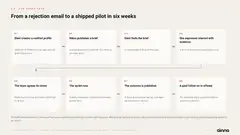
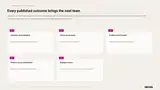
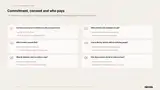
    Sample Product Requirements Deck for VentureForce, slide 1: Cover. The product and its promise, under the project's name.Sample Product Requirements Deck for VentureForce, slide 17: The happy path. From a rejection email to a shipped pilot in six weeks.+39
    Look inside
  3. 10

    PRD Executive Brief

    PowerPoint · 14 slides

    The PRD's case on a dozen slides, for the meeting that decides: the need, the users, the market, the edge, the MVP, pricing, the plan, risks, metrics and the ask.

    Distilled fromthe same six analyses, cut to what a decision needs.

    • Executive summary
    • The need
    • The users
    • Market size
    • Differentiation
    • Value proposition
    • The MVP
    • Revenue model
    • Implementation
    • Risks
    • Product performance
    • The ask

    GuideHow to write a PRD

    Sample PRD Executive Brief for VentureForce, slide 1: Cover. The case for the product, for the meeting that decides.Sample PRD Executive Brief for VentureForce, slide 2: Executive summary. Problem, product, market, plan and ask, each with its number.+11
    Look inside

IVThe build

  1. 11

    Functional Requirements Specification (FRS)

    Word · 13 pages

    Defines, testably, how the system must behave: rules, validations, exceptions, interfaces and acceptance tests, each traced to the PRD. Also known as a functional specification (FS or FSD).

    Distilled fromthe PRD's requirements, a check of the concept's scope, and a system model of its actors, capabilities, components, interfaces and data.

    • Purpose, audience and scope
    • Actors, roles and permissions
    • Rules that hold across the system
    • Compliance touchpoints
    • Each functional area, requirement by requirement
    • Business rules and validations
    • Inputs, outputs and data handling
    • Exceptions and system responses
    • Interface behaviour
    • Acceptance and test conditions
    • Traceability to the PRD
    • Assumptions and glossary
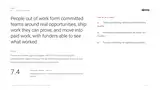
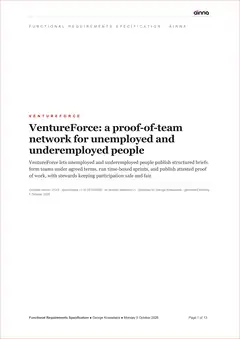
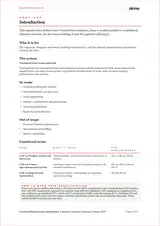
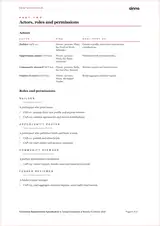
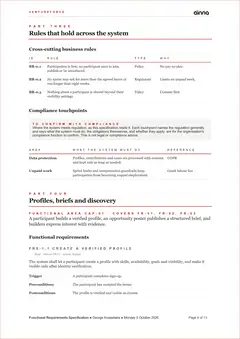
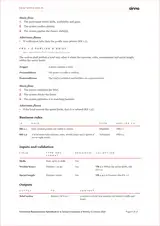
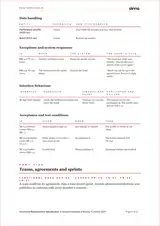
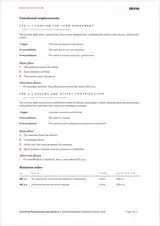
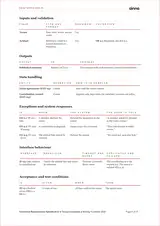
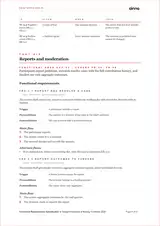
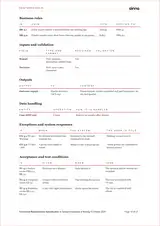
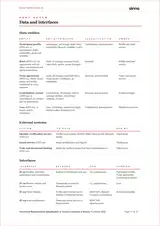
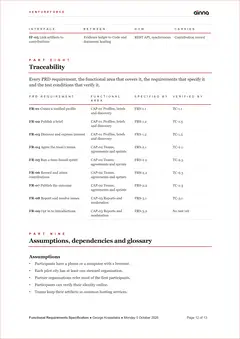
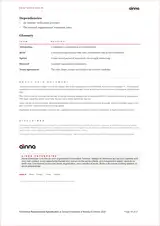
    Sample Functional Requirements Specification (FRS) for VentureForce, page 1: Title page. The concept and what the system does, with the concept version and the product definition it was written against.Sample Functional Requirements Specification (FRS) for VentureForce, page 4: Rules, compliance, then the first area. The rules that hold across the system and where it meets regulation; then the first functional area, requirement by requirement.Sample Functional Requirements Specification (FRS) for VentureForce, page 12: Traceability. Every PRD requirement traced to the area that covers it, the requirements that specify it and the tests that verify it.+10
    Look inside
  2. 12

    System Analysis, Design and Architecture

    Word · 9 pages, with diagrams

    The system at a high level: its context and logical architecture as diagrams, its components, integrations, data, security, deployment and the key decisions.

    Distilled fromthe PRD, and the same system model as the FRS.

    • The architecture in brief
    • What drives it
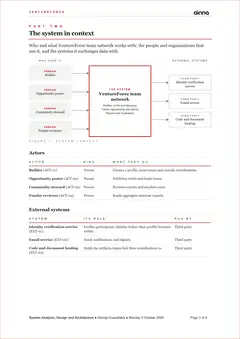
    • The system in context, as a diagram
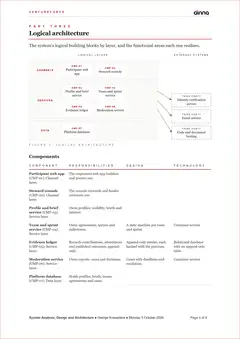
    • The logical architecture, as a diagram
    • Components and their responsibilities
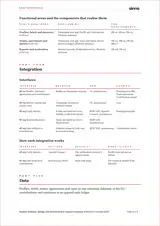
    • Integration patterns
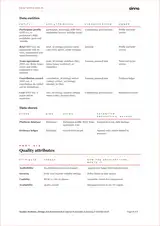
    • Data and its stores
    • Quality attributes, with targets
    • Security
    • Deployment and recovery objectives
    • Architecture decisions
    • Risks and transition
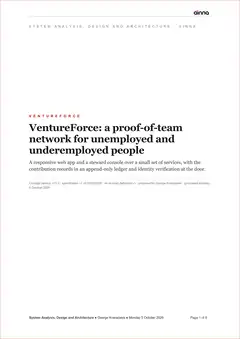
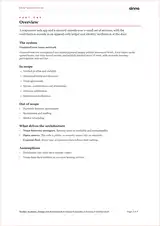
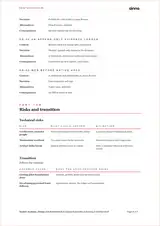
    Sample System Analysis, Design and Architecture for VentureForce, page 1: Title page. The system's architecture in brief, under the concept's name.Sample System Analysis, Design and Architecture for VentureForce, page 3: The system in context. Who uses the system and what it exchanges data with, drawn as a diagram of editable Word shapes.Sample System Analysis, Design and Architecture for VentureForce, page 4: Logical architecture. The layers and their components, with each component's responsibilities, design and technology.+6
    Look inside

Colophon

Clarity, by design.

Every document is architected and designed for one purpose: clarity. The designs are original, built on the method of Innovation Mode 2.0 (Springer Nature, 2026), where some of them are published. Its author, George Krasadakis, has spent 25 years building products, in a career that spans Microsoft, Accenture, GSK and ResMed. Ainna distils your work into each one: every claim in its place, every figure with its source or its assumption.

Decks are set in Roboto, documents in Georgia. The decks carry their fonts inside the file, so they open exactly as designed on any machine.

Questions

What people ask before they make their first one.

Are these templates?
No! These are the deliverables! A template gives you headings to fill; these are the finished documents that come out of the work. Ainna works through the problem and the idea with you, runs the analyses (the personas, the market sizing, the competition, the product definition, the system model) and packages the result as a finished PowerPoint deck or Word document, designed to be presented.
What documents can Ainna write?
Twelve, in four stages. For the problem: a problem framing document, a problem framing deck, a problem social carousel and a brainstorm outcomes deck. For the idea: an idea one-pager, an idea social carousel and a pitch deck. For the product: a product requirements document (PRD), a product requirements deck and a PRD executive brief. For the build: a functional requirements specification (FRS) and a system analysis, design and architecture document. Which ones you can create depends on your plan.
What is the difference between a PRD and an FRS?
A PRD says what to build and why: the problem, the users, the requirements as user stories, the scope and the plan. An FRS says exactly how the system must behave: every rule, validation, exception, interface and acceptance test, traced back to the PRD's requirements. Product and leadership decide with the PRD; engineers and testers build and test from the FRS.
Is an FRS the same as an SRS?
Close, and many teams use the names interchangeably. ISO/IEC/IEEE 29148, the international standard for requirements engineering, calls the software-level document a software requirements specification (SRS) and gives it all of a system's requirements, functional and non-functional. An FRS, also called a functional specification (FS or FSD), concentrates on the functional side: how the system must behave, rule by rule, with its validations, exceptions, interfaces and acceptance tests. Ainna's FRS traces each of these to the PRD, and its architecture document carries the quality targets.
What is the difference between a BRD and an FRS?
A business requirements document (BRD) states what the business needs and why, in the business's own terms. An FRS turns those needs into exactly how the system must behave, testably, for the people who build and test it. In banking, insurance and enterprise IT the two usually come as a pair. In Ainna, the PRD plays the BRD's part, with the business case, the users and the requirements, and the FRS traces every requirement back to it.
What goes into a software architecture document?
Ainna's covers the system in context and its logical architecture, both as diagrams; the components and their responsibilities; how it integrates with other systems; its data and where it is stored; quality attributes with targets; security; deployment and recovery objectives; and the key architecture decisions with their alternatives.
Do the documents agree with one another?
Yes. They distil the same work: the problem framing, the personas, the market, the business model and the plan. The FRS traces every requirement back to the PRD, and the architecture document is drawn from the same system model as the FRS.
How are the documents designed?
Every document is architected and designed for one purpose: clarity. The designs are original, built on the method of Innovation Mode 2.0 by George Krasadakis (Springer Nature, 2026), where some of them are published. Ainna distils your work into each one.
Are these real examples?
Every page shown was rendered by Ainna's document engine, all for one idea, VentureForce, which Ainna developed for a real problem on Problem Radar. The problem's figures come from the sources it cites; VentureForce is a concept, not a company, and its market figures are AI estimates.
Where should I start?
With the problem. Frame it, run a brainstorm, and the idea's one-pager and pitch deck follow. When you are ready to build, the PRD comes first, and the FRS and the architecture document rest on it.


Great work deserves great presentation

Start with a problem.

Work a problem through with Ainna and these documents come out of the work, written from your own analysis. Take a real one from Problem Radar, the one these samples began with or another, or bring your own.

  1. Problem 0032 · Work · Where these samples began

    A workforce unprepared for the disruption AI is bringing

    AI is changing work at several levels at once.

  2. Problem 0012 · Media

    Unverifiable AI answers

    Use of AI assistants for news is rising while stated trust in them stays very low: people take answers from a source they openly doubt, because it is faster than the alternative.

  3. Problem 0007 · Finance

    Invisible small-firm credit

    Small firms are assessed on documents they were never required to produce.

  4. Problem 0002 · Energy

    Grid connection backlog

    The constraint on the energy transition moved from manufacturing to administration, and no tooling followed it.
  5. Problem 0009 · Enterprise AI
    A widening cyber-security gap between big and small firms

    AI has made cyber attacks cheap to run and easy to scale.
  6. Problem 0010 · Work

    No AI-exposure offramp

    We can now say with some precision which occupations generative AI reaches first, how that varies by country, and that the exposure falls hardest on clerical and administrative work done mostly by women.

  7. Problem 0013 · Public sector

    Digital identity exclusion

    Benefits, banking, health records and school places are moving to interfaces that begin by asking you to prove who you are online.

  8. Problem 0005 · Health

    Doctors uncertain which antibiotics still work where they practise

    When a patient has an infection, the doctor, nurse or pharmacist has to choose an antibiotic that will work, and which ones still work depends on the place: resistance differs between countries and regions, and it is growing.

  9. Problem 0011 · Education

    Unverifiable student work

    Most institutions are writing or planning a policy about AI; few have changed what they actually measure.

Work on this problem 1 / 9

Or bring your own: start with your problem or idea →

Reconnecting

Your strategic session is being restored.

Still reconnecting

This is taking longer than usual. Your work is safe.

Connection lost

We couldn't restore the connection. Your work has been preserved.

Session expired

Your session has ended. Reload to continue where you left off.