
What is an innovation lab in the era of AI? A function, not a place #
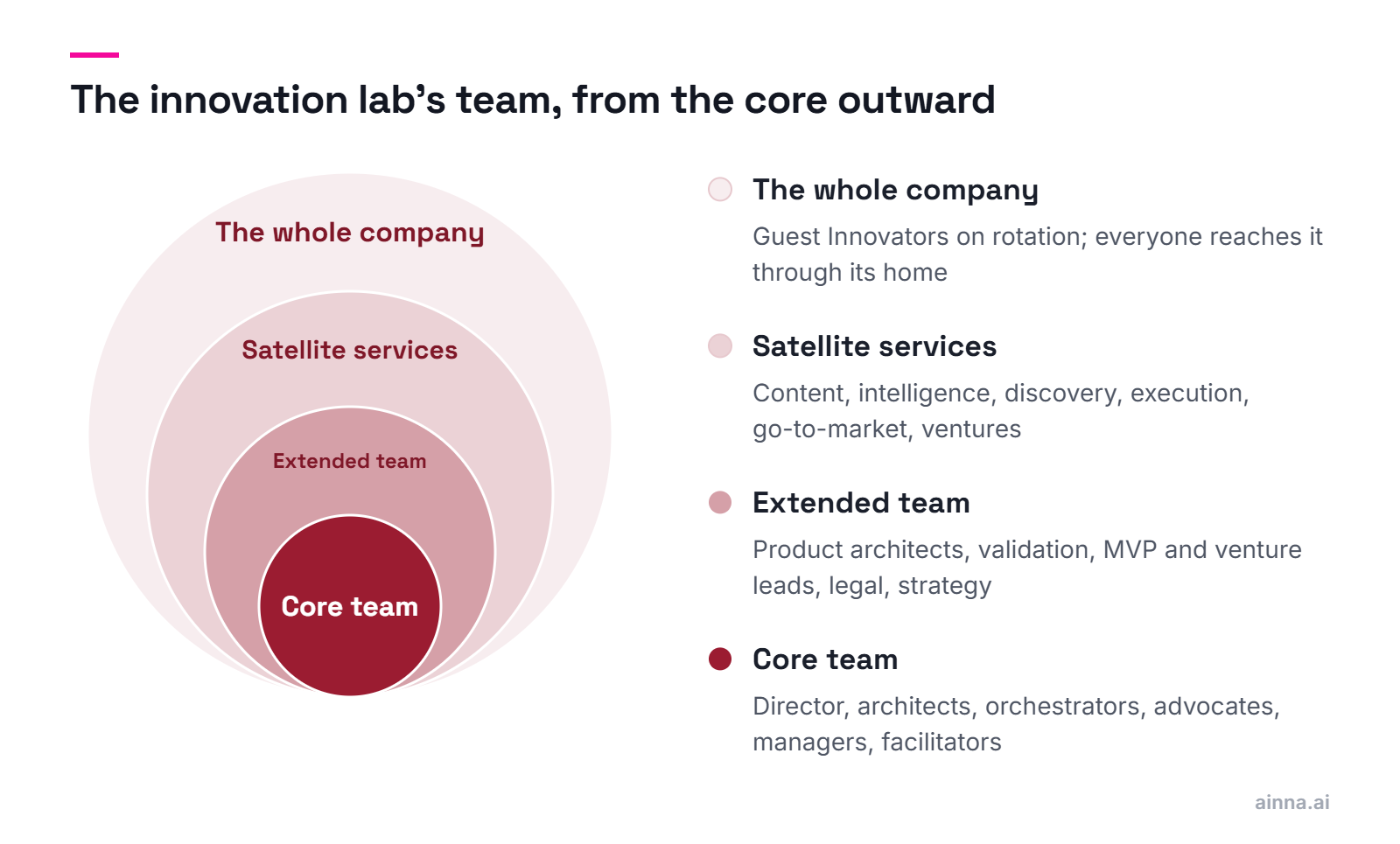
A function, not a place. An innovation lab is the visible part of what Innovation Mode 2.0 calls the innovation function: “an always-on system of processes, services, technology tools, knowledge, and talent, aiming to maximize the ability of the organization to discover and pursue opportunities.” The room and the demo wall are optional. What is not optional: a mandate, a small team that enables others, the services that take an idea from a problem to a validated opportunity, and a digital home where the whole company can reach them. In the era of AI, much of the service layer is software, and the people who remain are the ones who judge.
- What the function provides: capabilities “for capturing and evaluating ideas, sensing the market, rapidly developing prototypes, and running in-market experiments, as well as setting up and facilitating innovation workshops”
- Services, not a building: “In some cases, these services may be offered by specialized teams serving well-defined objectives,” such as market intelligence or large innovation workshops. A lab is such a team, with a name and a door
- The test of a lab: does it make the rest of the company more able to innovate, or does it innovate instead of the company? The first survives; the second is the lab that gets closed
- Four things every lab needs: a mandate, a team, the services and a home. Everything else, including the space, follows from those
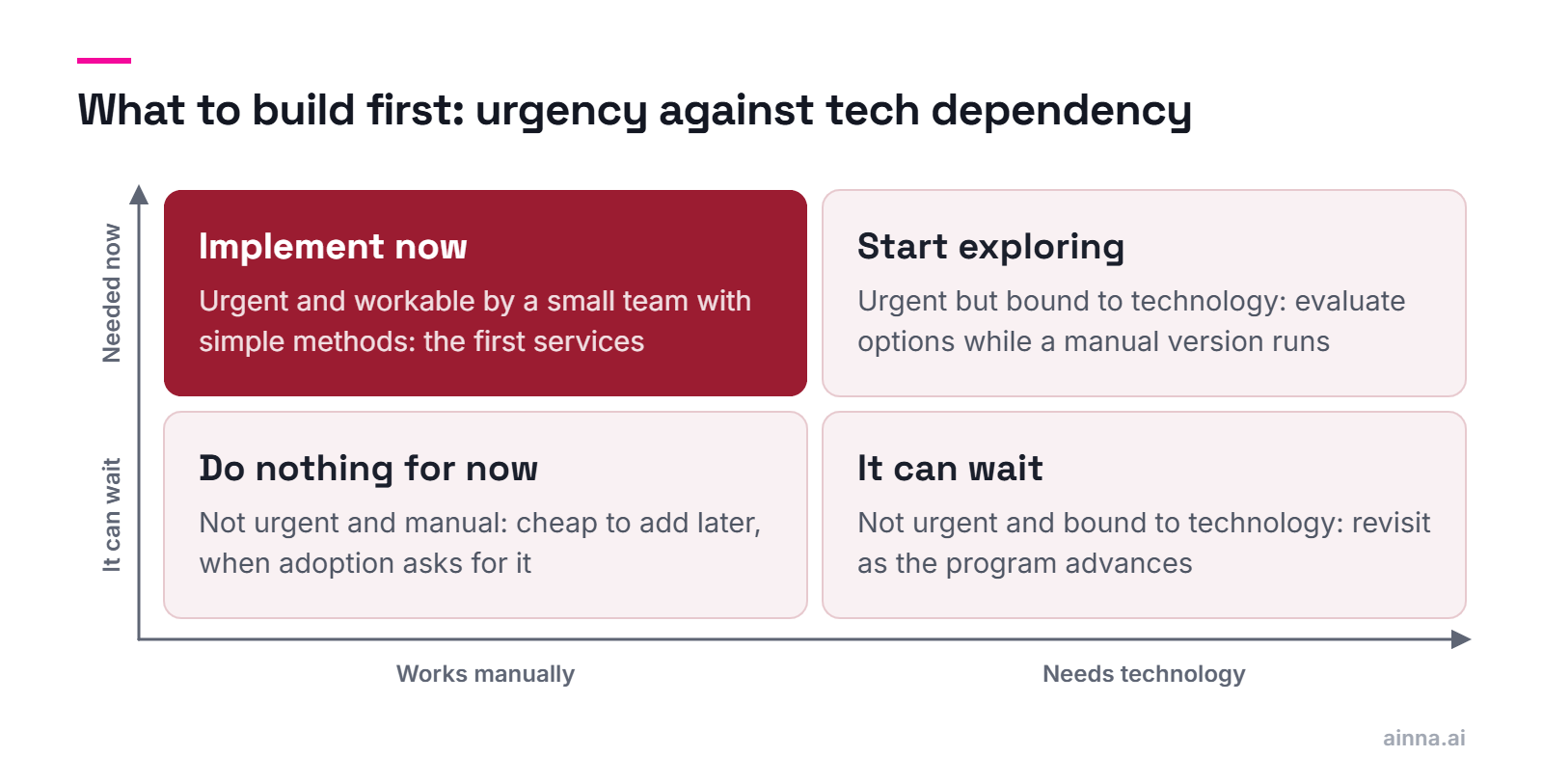
- What AI changes: the services that once needed a room full of analysts and facilitators run as agents; see what changes when AI does the work
- Whether you need one at all is a separate question, answered in do you need an innovation lab
Design the function first. If a space helps it, add the space. A lab designed the other way round is a showroom with a budget.