
Do we need an innovation lab? It depends on five things #
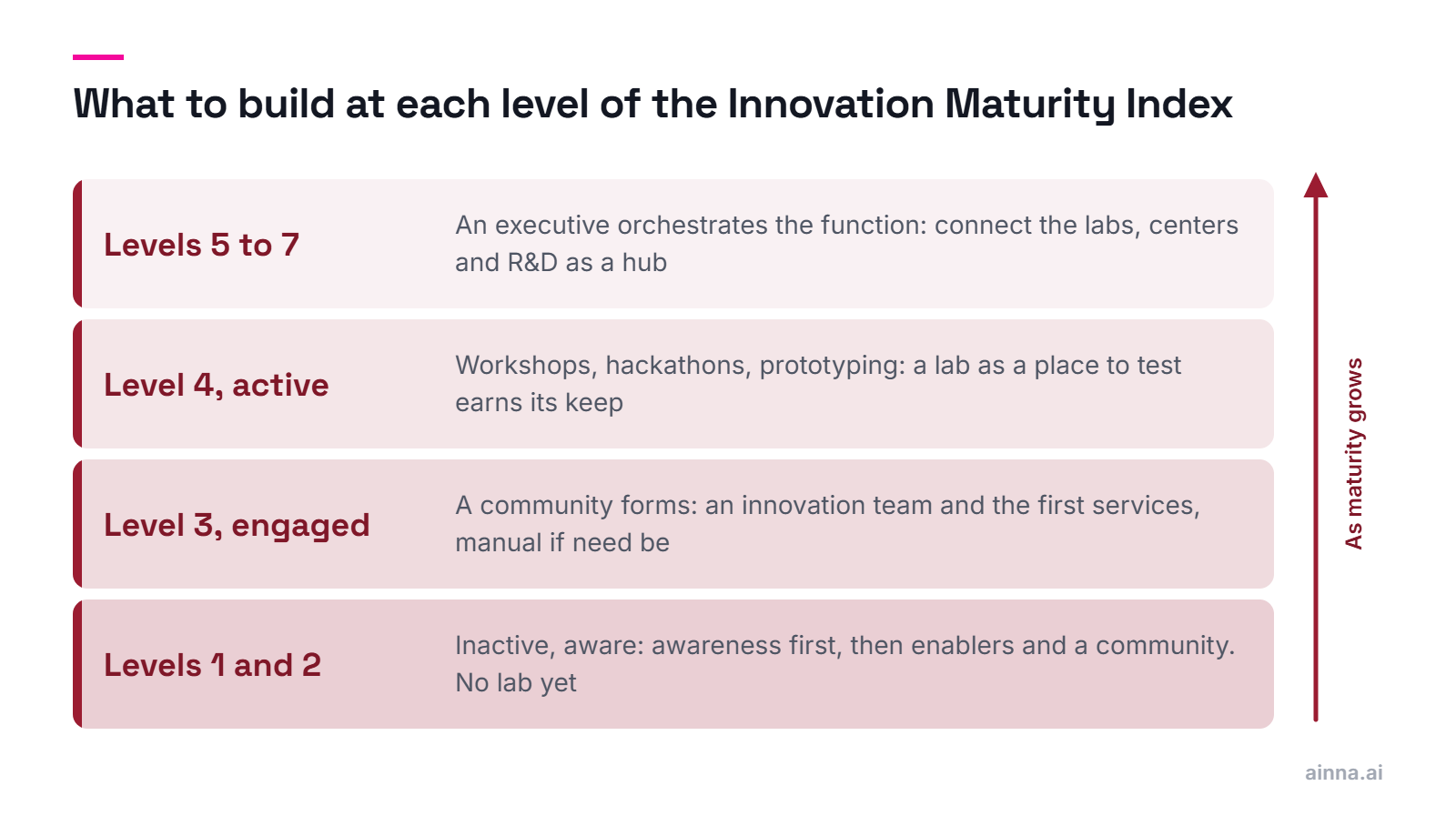
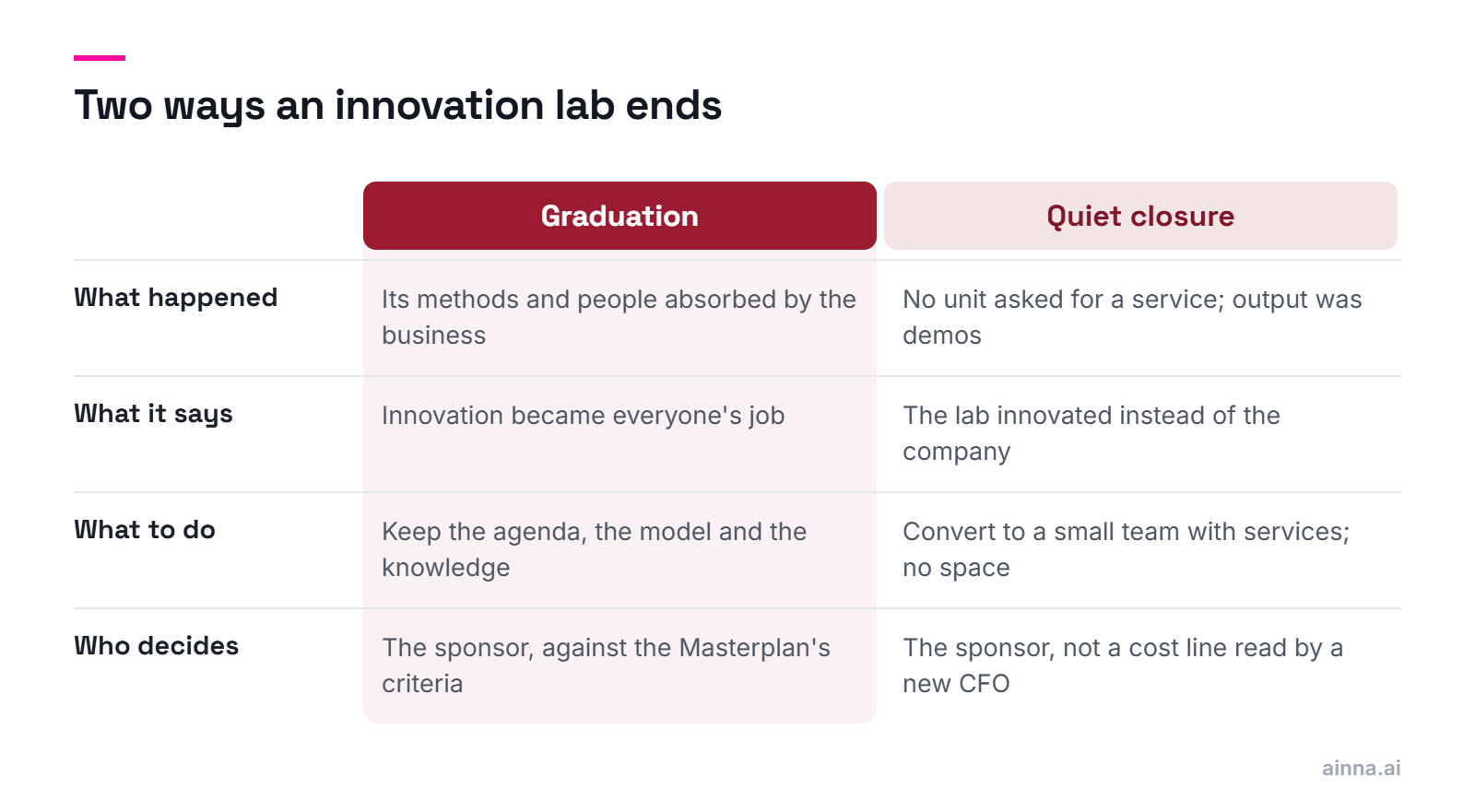
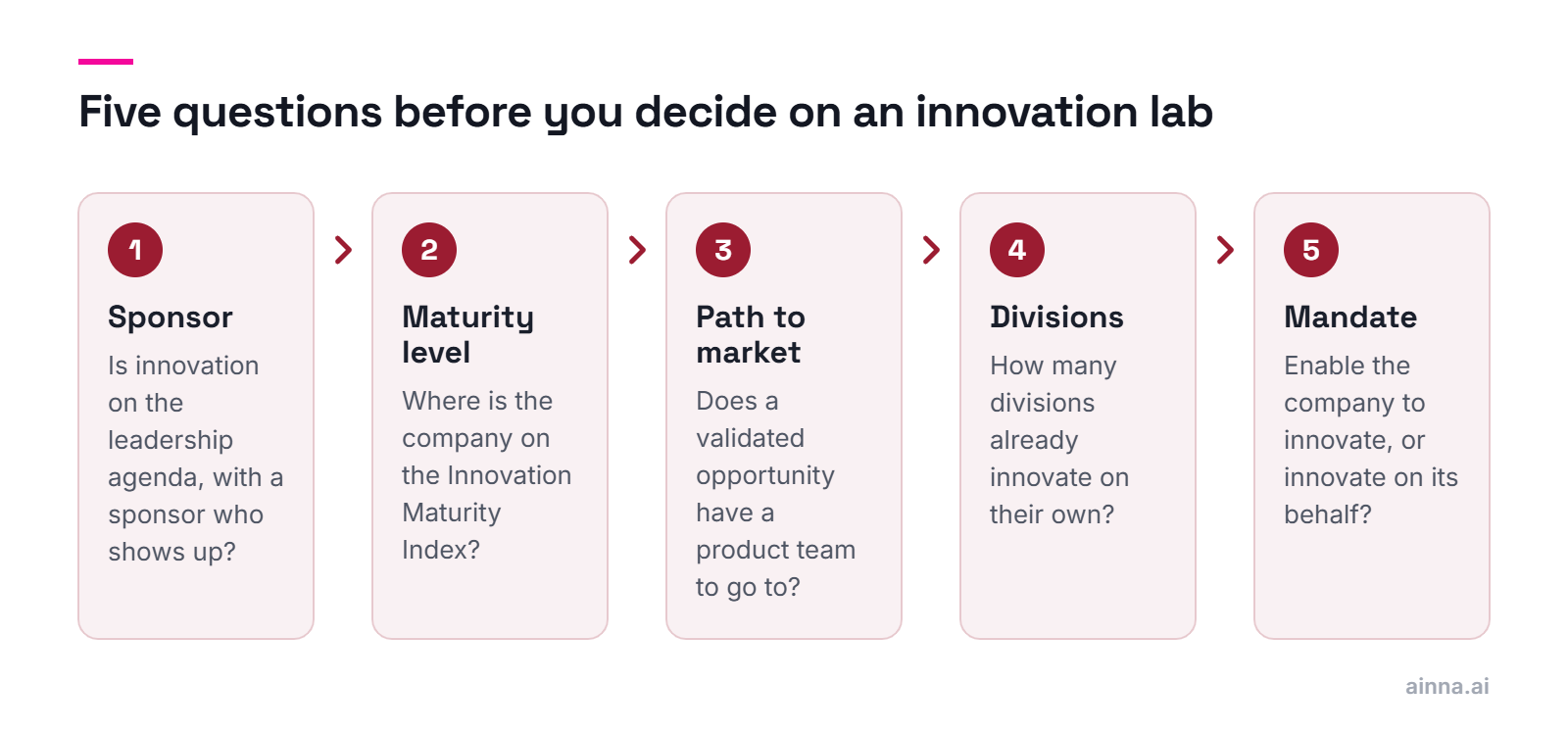
It depends on five things. First, whether innovation is on the leadership agenda with a sponsor who will show up; without that, a lab is a room. Second, where the company stands on the Innovation Maturity Index: below innovation-engaged, awareness comes first. Third, whether a validated opportunity has somewhere to go, a product team or a venture path. Fourth, how large and divided the company is, which decides between one team and a network of them. Fifth, what you want the lab to do: enable the company to innovate, or innovate on its behalf. The first survives; the second is the lab that gets closed. Most companies that ask the question need the innovation function, and only some of them need a lab.
- The function, not the place: what every company needs is what Innovation Mode 2.0 calls the innovation function, “an always-on system of processes, services, technology tools, knowledge, and talent, aiming to maximize the ability of the organization to discover and pursue opportunities.” A lab is one way to house part of it
- Sponsor: the program “needs executive sponsorship from the top level of the organization.” If the CEO will not stand on a stage for it, do not build it
- Maturity: the level decides the first move; see at what maturity level a lab makes sense
- A path to market: the lab's output is a validated opportunity, and someone has to build it; see what happens when nobody does
- Size and structure: one team with manual services for a mid-size company; a network of innovation cores for a group with divisions; see lab or team and several labs
- The mandate: enable or build. The design guide takes it from here: what the lab's mandate should be
Answer the five questions honestly and the lab mostly decides itself. The last answer, how to decide, turns them into a checklist.