
What is venture building? #
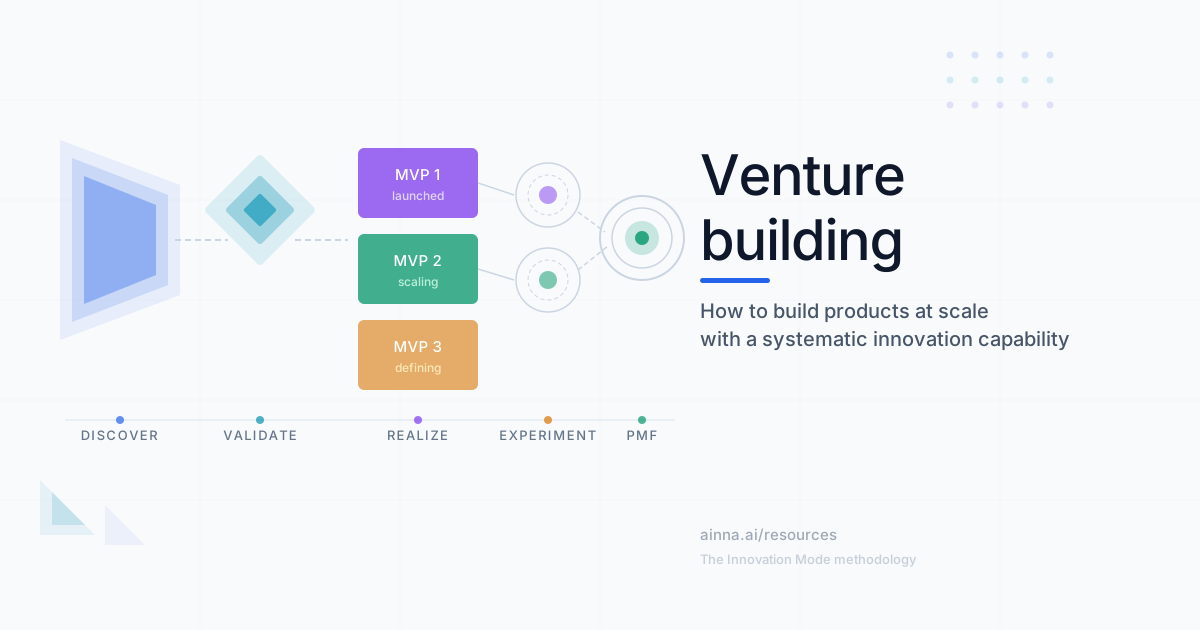
Venture building is the systematic process of creating new products, services, or businesses from validated opportunities using a dedicated, repeatable capability rather than ad hoc project teams. Most organizations struggle with innovation not because they lack ideas but because they lack the machinery to turn ideas into launched products at speed. In the Innovation Mode methodology, venture building is formalized as the Opportunity Realization capability - a specialized cross-functional team that defines, builds, launches, and rapidly scales MVPs toward product-market fit through fast experiment-build-measure cycles.
- The problem venture building solves: existing product teams are busy executing their roadmaps and rarely have the bandwidth, incentive, or specialized skills to take a new concept from zero to market. Innovation projects get deprioritized, delayed, or watered down. Venture building creates a dedicated path that bypasses this bottleneck
- In the Innovation Mode framework, venture building is the third of the Three Essential Innovation Capabilities: Opportunity Discovery (finding high-potential concepts), Opportunity Validation (testing them with real-world evidence), and Opportunity Realization (building MVPs and driving growth). Each capability feeds the next in a closed loop
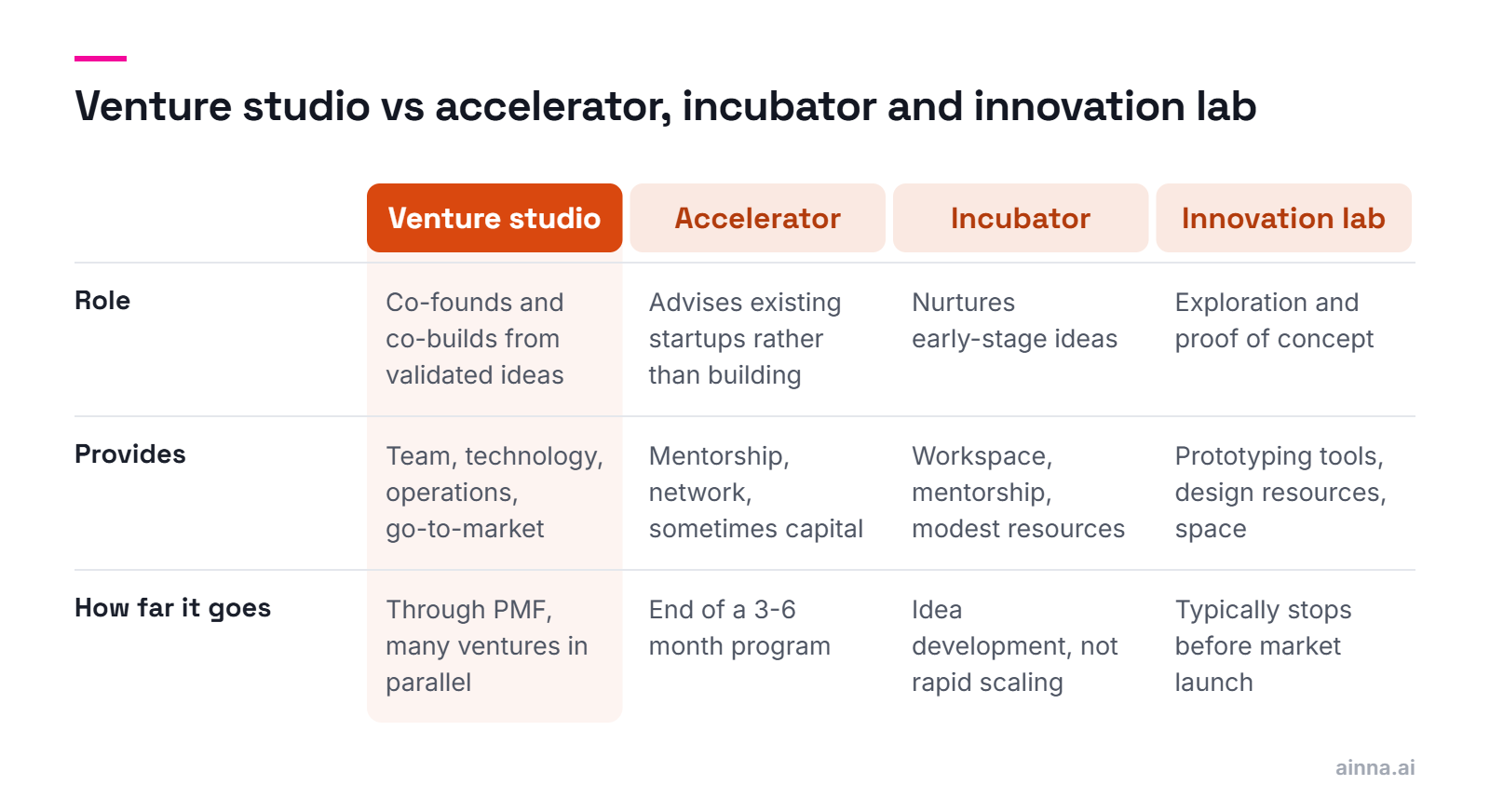
- The key difference from traditional product development: venture building operates as a 'factory model' - a repeatable, scalable capability that can run multiple ventures simultaneously. As described in Innovation Mode 2.0, the team 'utilizes a consistent framework for ongoing, data-driven product innovation, allowing them to achieve unparalleled productivity, quality, and speed'
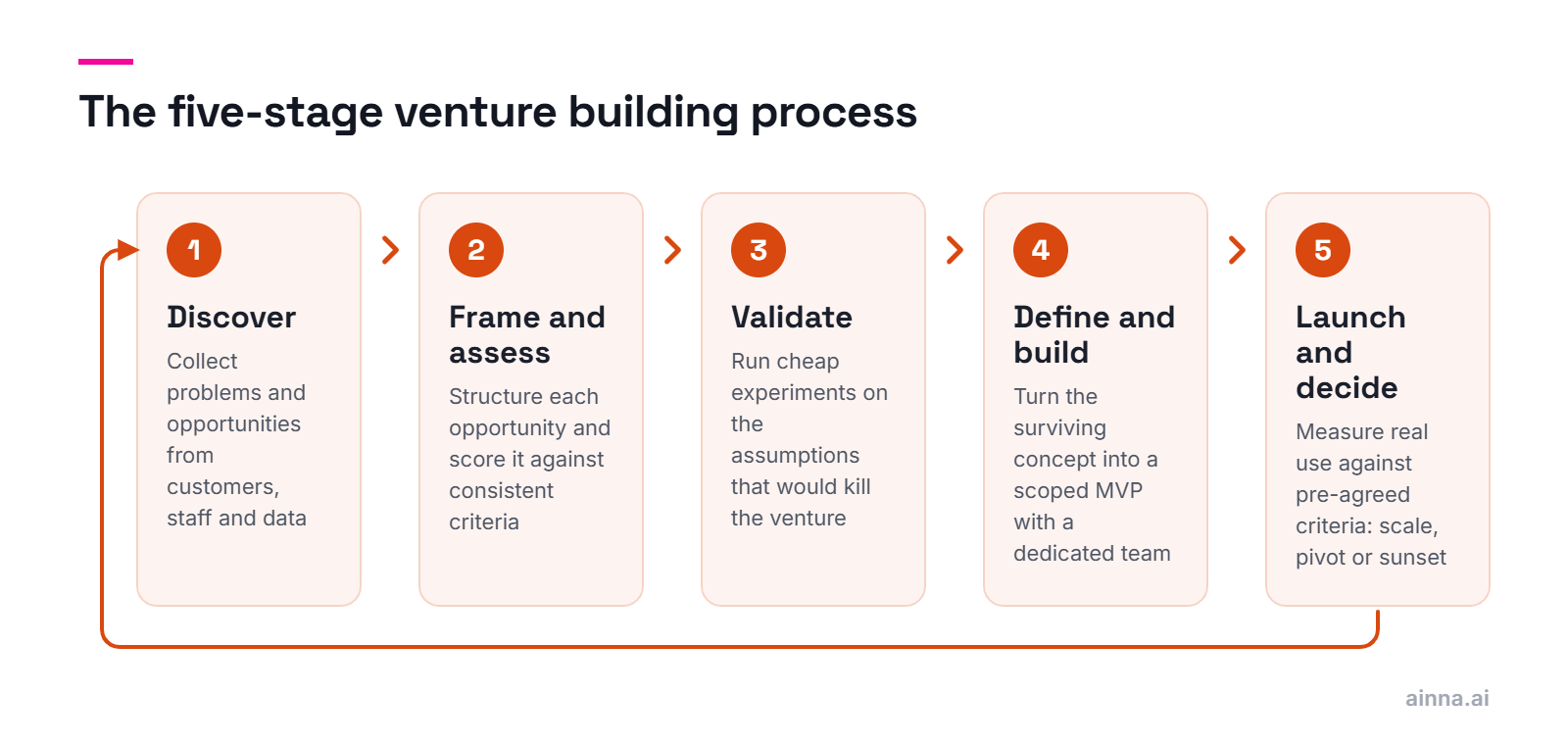
- Venture building encompasses the full lifecycle: from receiving a validated opportunity, through MVP definition and development, to market launch, rapid experimentation, and either scaling toward PMF or a structured sunset decision
- The output is not just products - it's ventures. As Innovation Mode 2.0 states: 'opportunity realization seeks more than successful products; it attempts to shape high-potential business ventures'
- Speed is achieved through lean processes, fast decision-making, and reusability of software components, analytical tools, and operational playbooks across ventures
Venture building transforms innovation from an occasional, unpredictable activity into a systematic, measurable capability. The organizations that build this capability create a sustainable competitive advantage: they can pursue more opportunities, faster, with higher success rates and lower cost per experiment.