
What is innovation culture? #
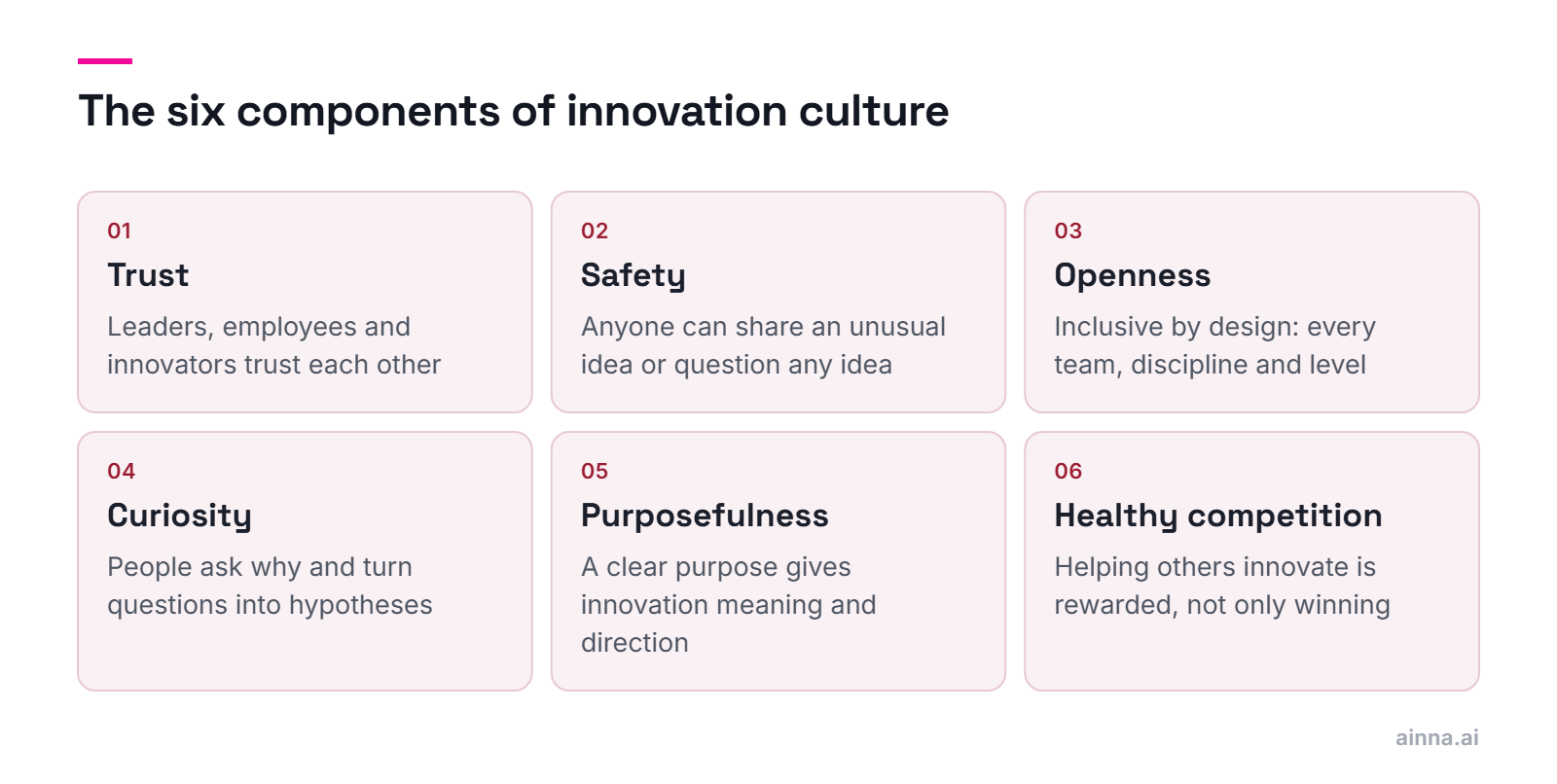
Innovation culture is a special, collective mindset that encourages the exploration of novel ways to improve business outcomes. That is how I define it in Innovation Mode 2.0, where I also describe it as “a delicate construct that reflects how people perceive the innovation process and how they feel about it collectively.” Also called a culture of innovation or an innovative culture, it is not a program, a lab or an event calendar. It rests on six components: trust, safety, openness, curiosity, purposefulness and healthy competition.
- Collective, not individual: it describes the dominant attitude across the organization, not the enthusiasm of a few, and it begins to form when a critical mass of people use the innovation function to pursue the organization's purpose
- Driven from within: nobody has to schedule it. “In truly innovative companies, this force of improvement, the propensity to novelty, comes from within, from the collective state of mind.”
- An attitude to change: it shows in how people react to change and in their willingness to try new things that serve the organization's purpose
- Three names, one idea: innovation culture, a culture of innovation and an innovative culture describe the same collective mindset; the book uses the first two interchangeably
- Built on six components: trust, safety, openness, curiosity, purposefulness and healthy competition, each strengthened or damaged by everyday decisions
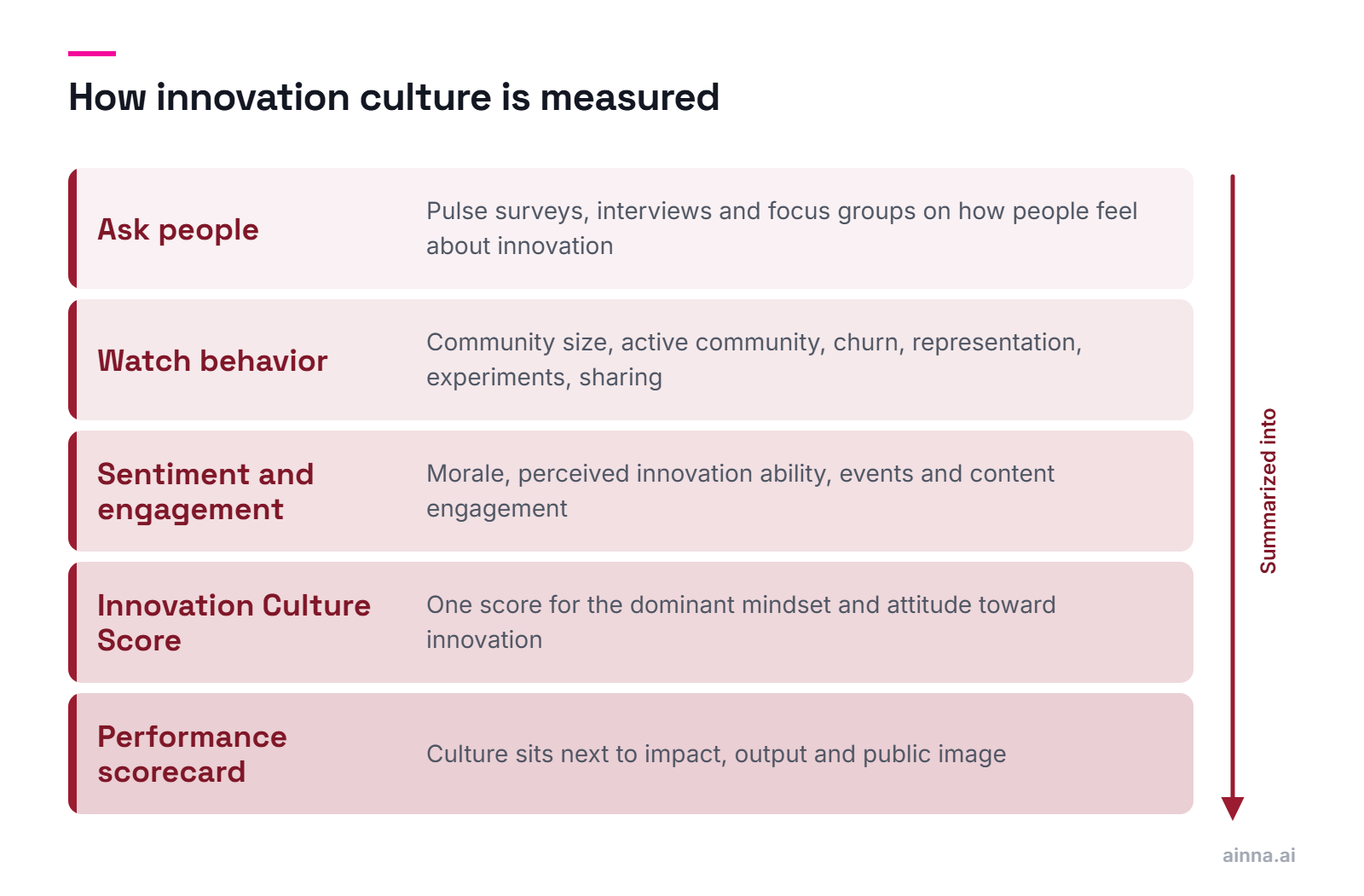
- Measurable: directly, by asking people, and indirectly, through behaviors such as participation and experimentation; see how to measure innovation culture
Key Takeaway
If innovation happens only when a program asks for it, the company has an innovation program. When people pursue opportunities on their own, it has an innovation culture.