

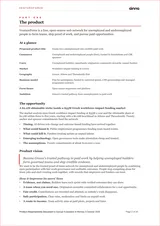
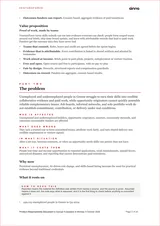
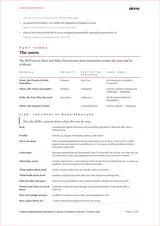
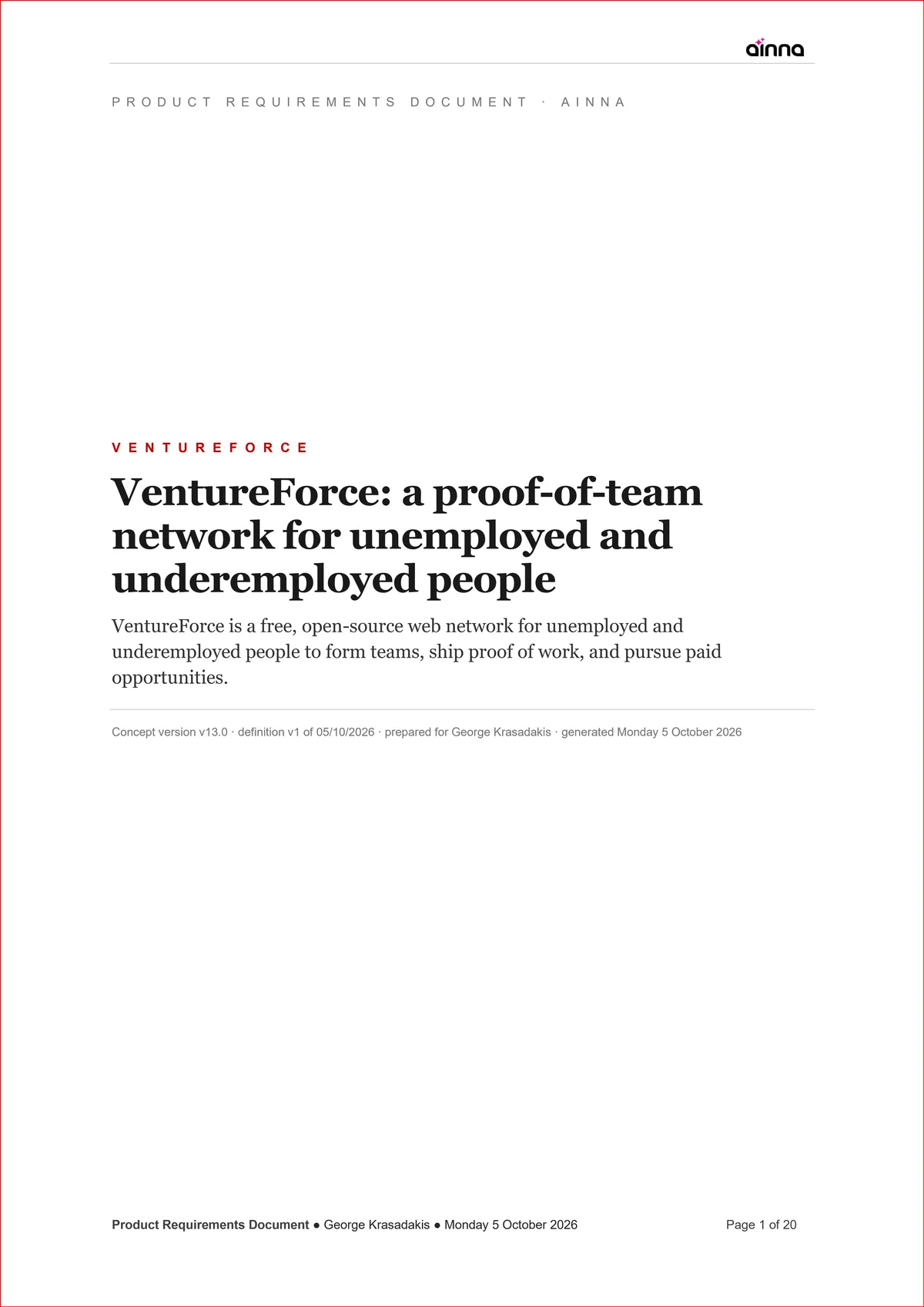
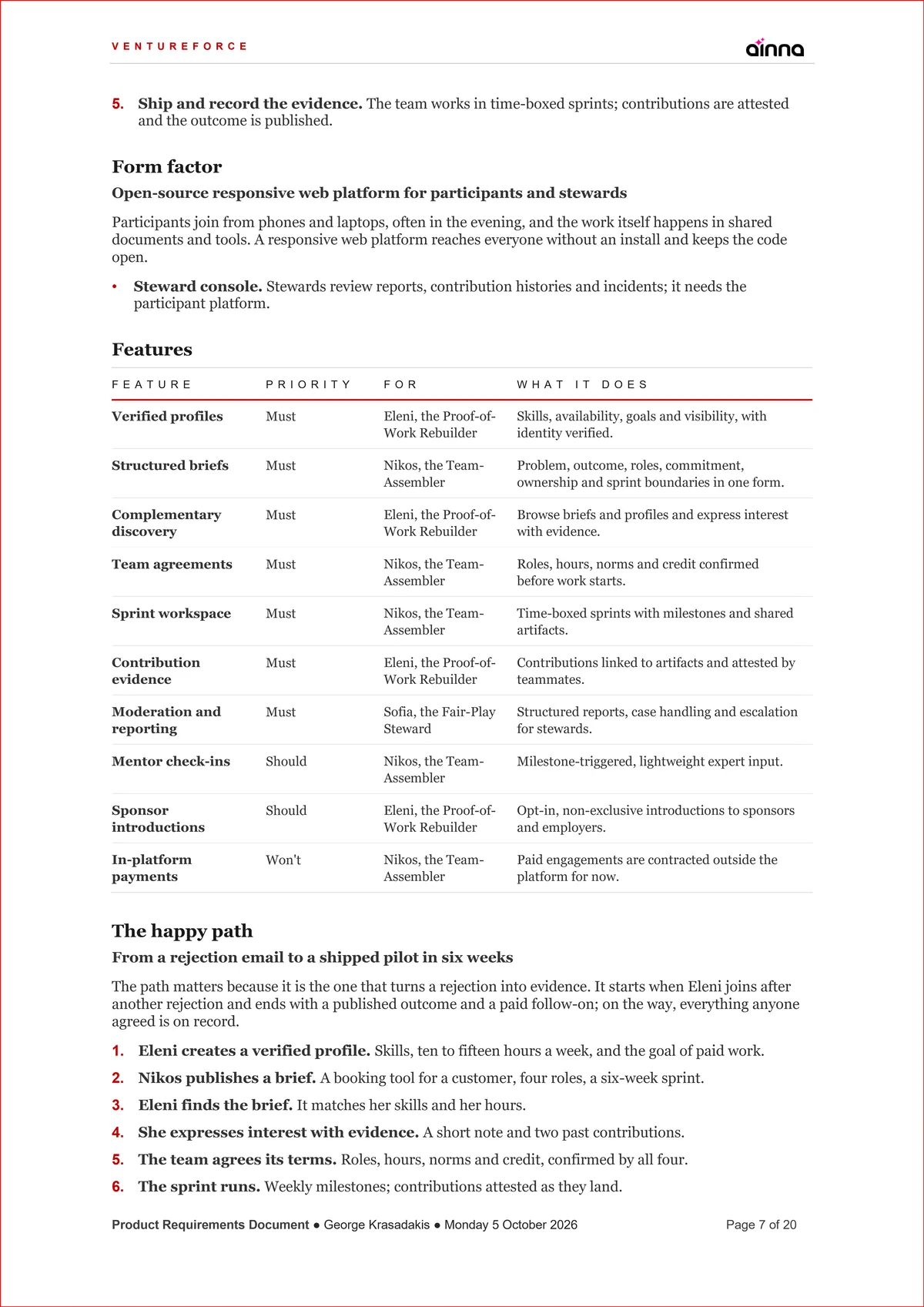
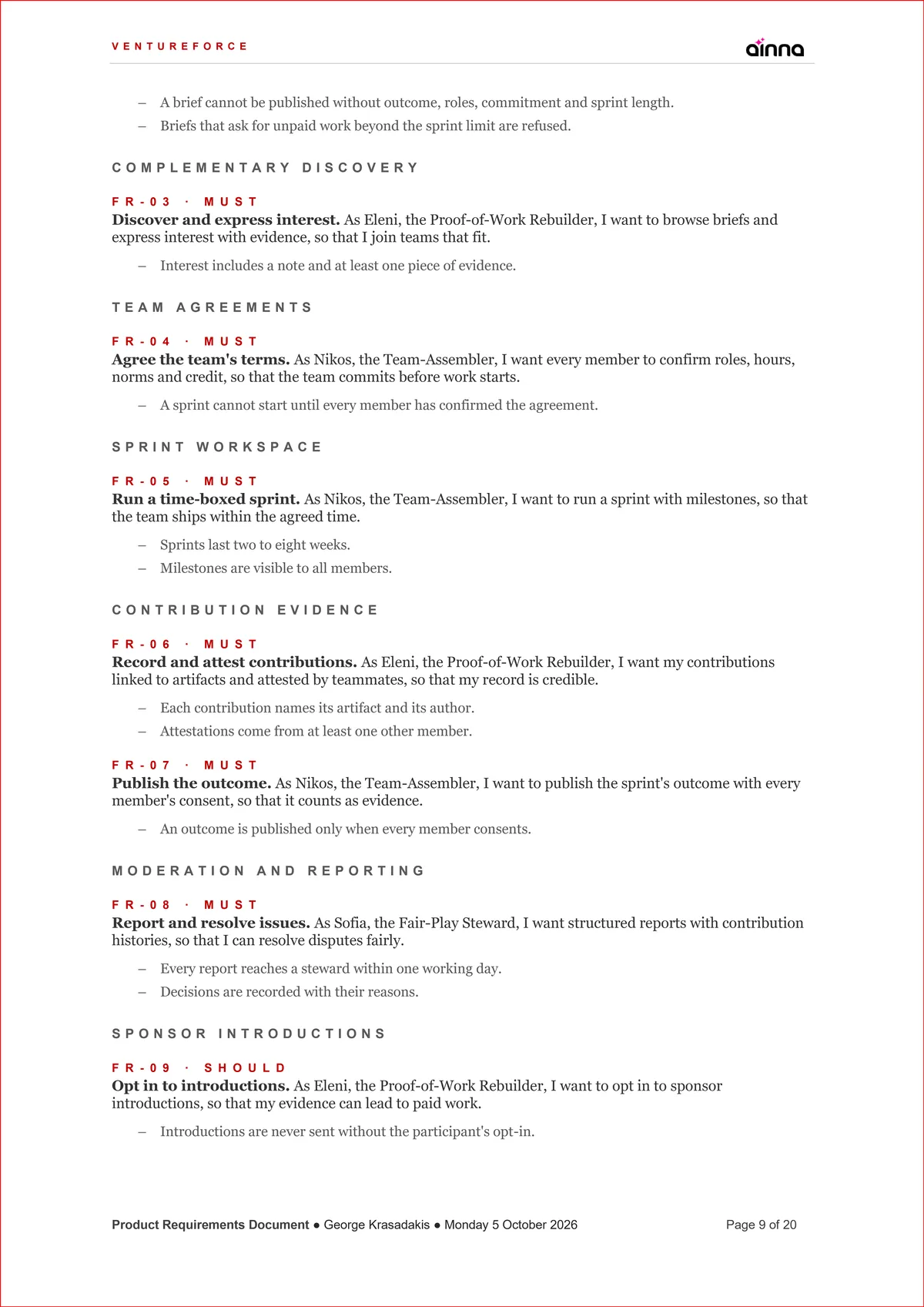
What is a product requirements document (PRD)?
A product requirements document (PRD) says what to build and why: the users, the requirements as user stories, the MVP scope, success metrics, risks and the delivery plan, clear enough for engineers and for leadership.
Also called: PRD, Product requirements doc.
Why it matters
Without one document, every team builds its own picture of the product: scope creeps, priorities drift, and the product launches without a coherent story.
The PRD is the single source of truth that product, engineering, design and leadership all read. Free templates give you headings; a PRD worth the name is a system, where every section rests on the analysis before it.
The product lifecycle, in four parts
Ainna's PRD follows the lifecycle of Innovation Mode 2.0, from the opportunity to the market.
- Discover. The problem, the users, the market and the competition. In Ainna's document: the problem, and the users in full.
- Define. The vision, the value proposition, the happy path, the MVP scope and the business model. In Ainna's document: the solution and the happy path, the MVP, the business model.
- Build. The requirements, the quality targets, and the risks to retire before writing code. In Ainna's document: the requirements as user stories, the quality requirements, the risks.
- Launch. The plan and the measures of success. In Ainna's document: the plan and the success metrics.
The method as a template: PRD Toolkit, on theinnovationmode.com.
What's inside
- The product at a glance
- The need
- The users, in full
- The solution and the happy path
- The MVP, and what is out
- Requirements, as user stories
- Quality requirements
- Business model
- Risks
- Plan and success metrics
Where it fits
It is distilled from six analyses: the personas, the market sizing, the competitive map, the product definition, the business plan and the delivery plan.
It comes after Idea One-Pager and Pitch Deck, and leads to Product Requirements Deck, PRD Executive Brief, Functional Requirements Specification (FRS) and System Analysis, Design and Architecture.
Questions
How is a PRD different from a product concept?
In Innovation Mode's sequence, the product concept comes first: why the product should exist, for whom, and how it wins. Ainna's PRD carries that concept and adds the requirements as user stories, the MVP and the plan. The exhaustive how (every rule, validation and acceptance test) belongs to the FRS.
What is the difference between a PRD and an FRS?
A PRD says what to build and why: the problem, the users, the requirements as user stories, the scope and the plan. An FRS says exactly how the system must behave: every rule, validation, exception, interface and acceptance test, traced back to the PRD's requirements. Product and leadership decide with the PRD; engineers and testers build and test from the FRS.
How long should a PRD be?
Long enough to be unambiguous, short enough to be read. Ainna's runs to about 20 pages, with the requirements in tables.
Is there a PRD template?
This is a finished PRD, not a template. The guide shows the structure, and Ainna writes yours from your own analysis.
Do the work in Ainna.
Ainna is where you frame a problem, explore ideas and test them against the evidence. When the work is done, this is how it is packaged: a product requirements document (PRD), written from your own analysis, about your own idea.
Which documents you can create depends on your plan.
Read next
- Guide: How Do You Write a Great PRD?
- Guide: How Do You Write User Stories That Actually Drive Development?
- Where VentureForce began: number 0032 on Problem Radar
- All twelve: the document examples, together