
What is a problem framing deck?
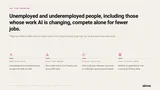
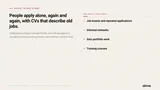
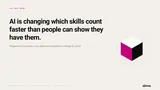
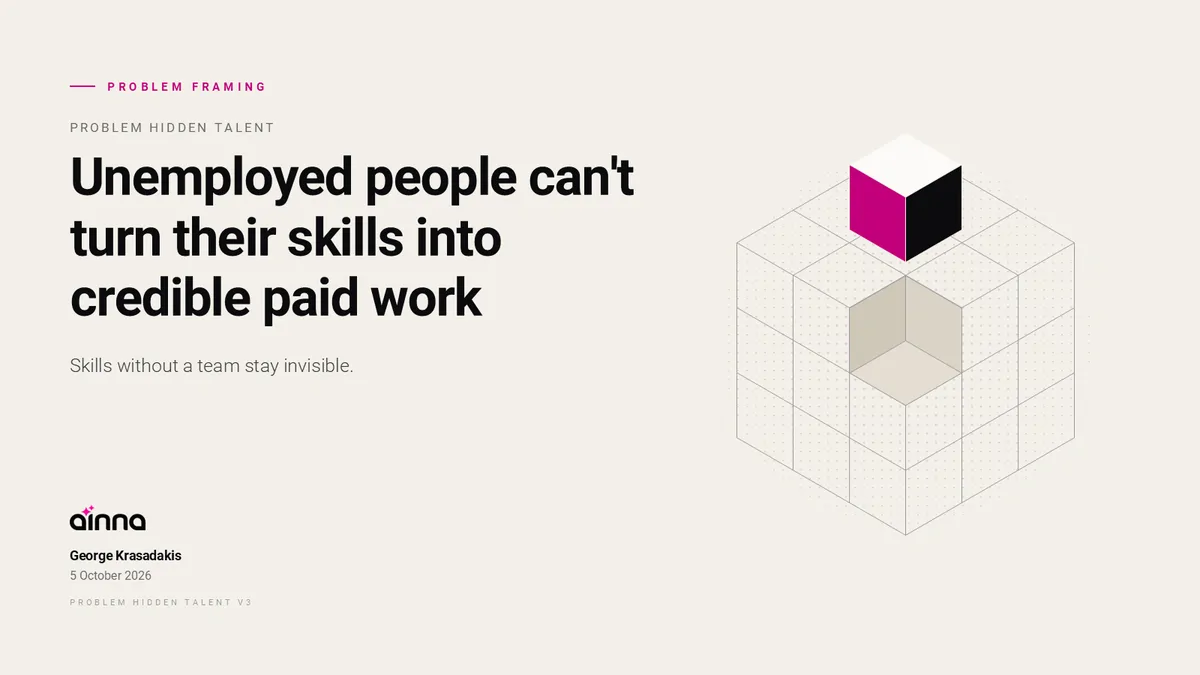
A problem framing deck presents a problem as slides: what goes wrong and for whom, the evidence, why now, what solved would look like and how it grades, so a team agrees on the problem before anyone pitches a solution.
Also called: Problem statement presentation.
Why it matters
The framing document is for reading; the deck is for the room. It turns the same four dimensions into a sequence a group can discuss and agree on, so the brainstorm starts from one problem rather than from everyone's own.
The four dimensions, as slides
The deck carries the same framing as the document, then adds how the problem grades, the questions it raises and the directions on the board.
- The environment. The who and the where: the people affected, the stakeholders, and the setting the problem lives in. In Ainna's document: the people and the setting.
- The dynamics. The when and the trend: how the problem emerged, how it is changing, and what has been tried. In Ainna's document: why now, and how people cope today.
- The current state. The what and the why: symptoms, impacts and root causes, with cause kept apart from effect. In Ainna's document: the current state.
- The ideal state. The vision: what solved looks like, measurably, without prescribing the solution. In Ainna's document: the ideal state, and how we would know it is solved.
Prefer a template? See the Problem Statement Template on theinnovationmode.com.
What's inside, part by part
- Taken apart
- The problem broken down: who it affects, what goes wrong and what it costs.From the framing.
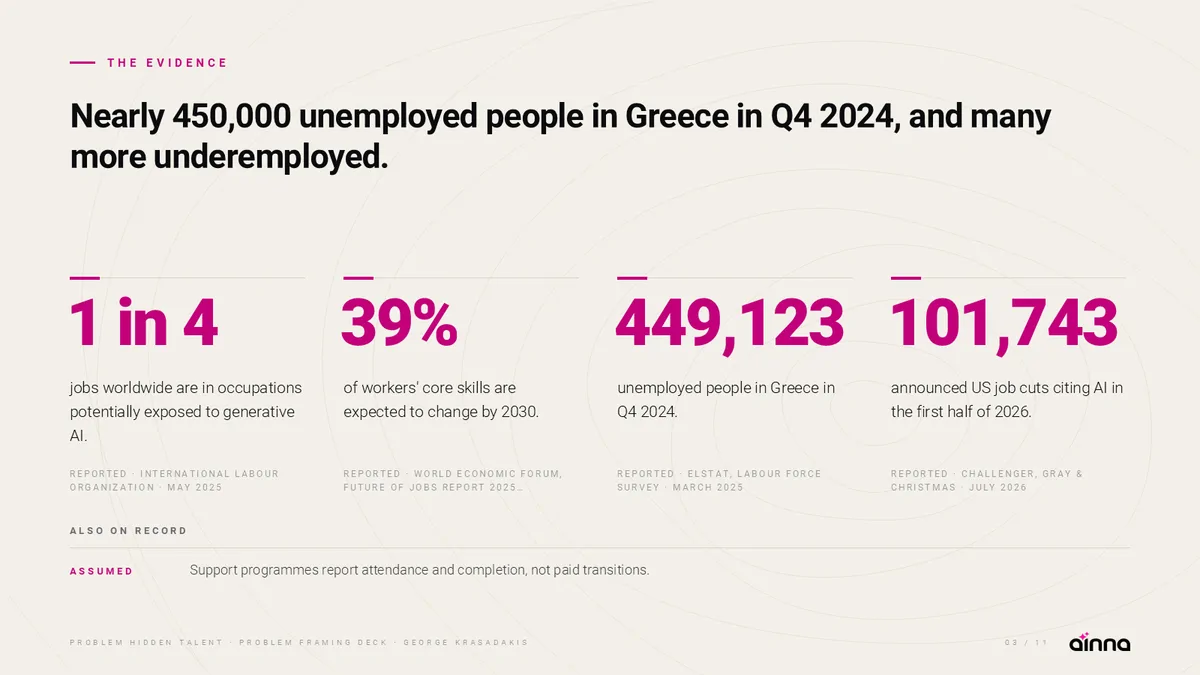
- The evidence, in figures
- The numbers that make it real, each with its source.From the evidence.
- Where things stand
- How it works today, and how people cope.From the framing.
- Why now
- Why this is the moment to act.From the evidence.
- Who it touches
- Everyone affected, directly and indirectly.From the framing.
- What solved looks like
- The outcome the room agrees to aim for.From the framing.
- How it grades
- The problem's grade, and the reasoning behind it.From the Judge's assessment.
- The questions it raises
- What has to be answered before anyone pitches a solution.From the framing.
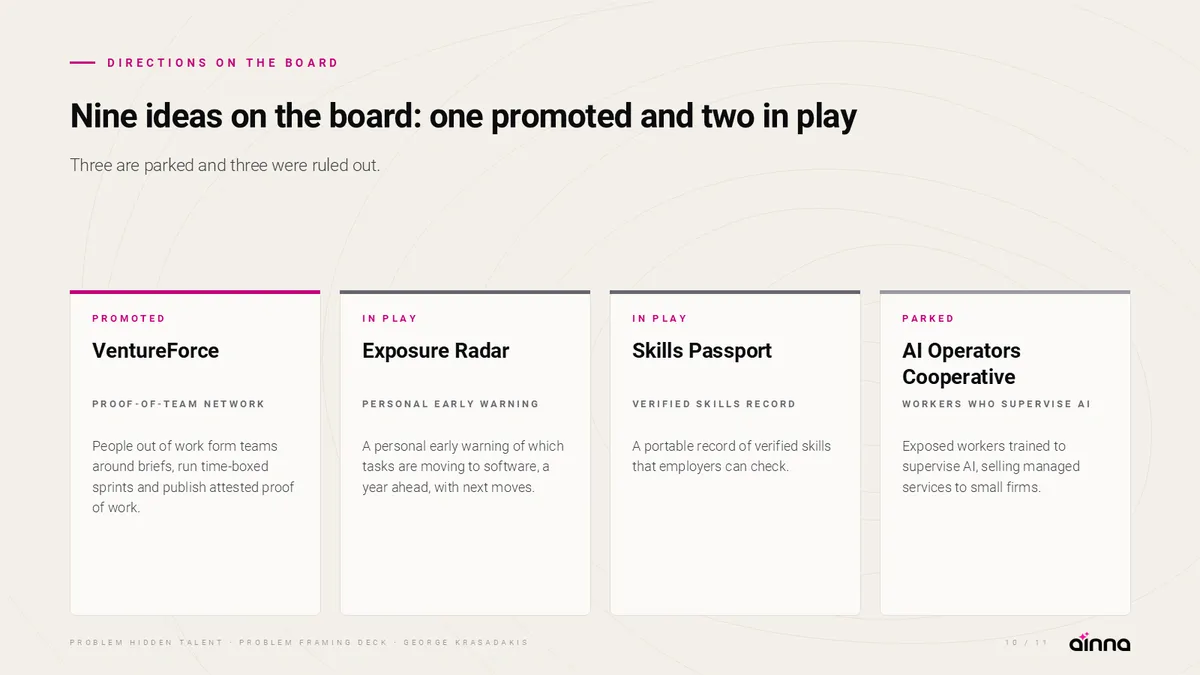
- Directions on the board
- The first ideas, as directions to explore rather than answers.From the brainstorm board.
Where it fits
It is distilled from the framing, its evidence and grade, and the ideas on the board.
It comes after the Problem Framing Document, and leads to the Brainstorm Outcomes Deck.
How the problem framing deck compares with related documents
| Document | Answers | Read by | Length |
|---|---|---|---|
| Problem Framing Document | What the problem is, with the evidence | The team and its sponsors | 5 pages |
| Problem Framing Deck | The problem, for the meeting that agrees it | The room that has to agree | 11 slides |
| Problem Social Carousel | The problem, for your network | LinkedIn and Instagram | 5 portrait slides |
| Brainstorm Outcomes Deck | What a brainstorm produced | The people who weren't in the room | 10 slides |
Questions
Who is a problem framing deck for?
The people who have to agree on the problem before any solution is pitched: the team, its sponsors and the stakeholders who will fund or use what comes next.
Document or deck: which do I need?
Both carry the same framing. The document is for reading and reference, with the evidence in full; the deck is for presenting and agreeing, a slide per idea.
What belongs on a problem slide?
One claim, the evidence for it, and its source. Never a solution.
Why show how people cope today?
A problem people already work around tells you what any idea will compete with, and what the workaround costs them. The room should know it before the brainstorm starts.
Yours comes from the work, not from a prompt
- The deck is set from a problem Ainna framed with you, with its evidence and its grade.
- Every figure carries its source or its method, and estimates are labelled as estimates.
- Where a piece of the work is missing, the document leaves it out instead of filling it with plausible text.
- It agrees with every other document Ainna makes from the same idea, because they all come from one body of work.
- It is yours to edit as a PowerPoint deck, and it can carry your logo.
Create yours in Ainna.
Ainna is where you frame a problem, explore ideas and test them against the evidence. When the work is done, Ainna packages it as a problem framing deck like this one: from your own analysis, about your own idea.
Which documents you can create depends on your plan.
Read next
- The problem behind this sample: no. 0032 on the Problem Radar
- See all twelve document examples